Trinetra Ganesh Temple, Ranthambore
A temple of Trinetra Ganesh (त्रिनेत्र गणेश), the three eyed form of Lord Ganesha, set within the walls of Ranthambore Fort near Sawai Madhopur. Temple tradition holds that the murti is svayambhu, and devotees across India post the first wedding invitation of their family here. A complete guide for pilgrims and visitors.
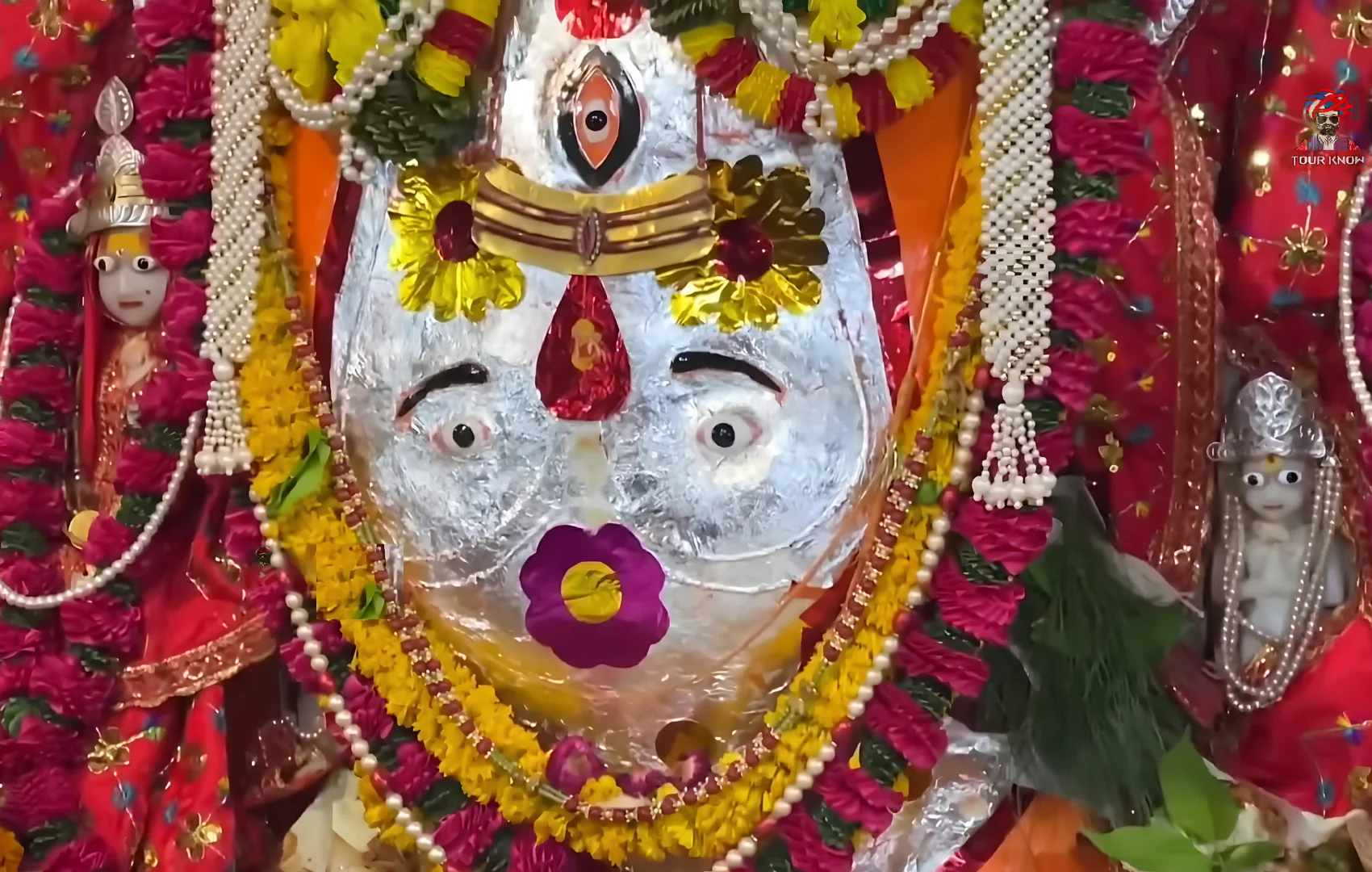
Trinetra Ganesh Temple (त्रिनेत्र गणेश मंदिर रणथंभौर, सवाई माधोपुर) is a temple of Lord Ganesha (भगवान गणेश) in his rare three eyed form, located inside Ranthambore Fort, about 13 km from Sawai Madhopur railway station in Rajasthan. It is the only well known temple in India where Trinetra Ganesh gives darshan together with his entire family: his consorts Riddhi and Siddhi (रिद्धि सिद्धि), his sons Shubh and Labh (शुभ लाभ), and his vahan, the mushak. Temple tradition holds that the murti is svayambhu (स्वयंभू), self manifested from the hillside, and that Hammir Dev Chauhan raised the temple around 1300 CE during the historic siege of Ranthambore. The fort itself is part of the UNESCO World Heritage listed Hill Forts of Rajasthan, which means pilgrimage and heritage meet at a single destination here.
Devotees across India post the first wedding invitation card of every mangal karya to this temple, a living tradition rooted in the katha of Shri Krishna and Rukmini. Visitors can reach the temple without a tiger safari booking, and the Ganesh Chaturthi mela each year draws lakhs of pilgrims to Ranthambore. This guide covers the story, history, darshan, timings, and every practical detail for your visit.
Everything Covered in This Guide
Navigate to any section — history, sacred stories, timings, or travel tips — all in one comprehensive guide to Trinetra Ganesh Temple.
Temple at a Glance
History of Trinetra Ganesh Temple
Architecture of the Temple
Sacred Stories of Trinetra Ganesh Temple
Why Lord Ganesha is Worshipped First
Darshan & Aarti Timings
Best Time to Visit
Festivals & Mela Celebration
How to Reach
Practical Tips
Nearby Temples & Places to Visit
FAQs
Trinetra Ganesh Temple – At a Glance
Temple at a Glance
Complete quick-reference information about Trinetra Ganesh Temple, Ranthambore — for devotees, pilgrims, and travellers.
| Temple Identity | ||
| 🏷️ | Official Name | Trinetra Ganesh Temple (त्रिनेत्र गणेश मंदिर) |
| 📝 | Also Known As | Ranthambore Ganesh Mandir Trinetra Ganesh Ji Maharaj Pratham Ganesh of Ranthambore |
| 📍 | Location | Inside Ranthambore Fort, Sawai Madhopur District, Rajasthan |
| Deity & Worship | ||
| 🙏 | Primary Deity | Lord Ganesha (भगवान गणेश) — worshipped here as Trinetra Ganesh, the three eyed form |
| ✨ | Deity Form | Svayambhu Murti — temple tradition holds the murti self-manifested from the hillside; darshan is of the mukh (मुखारविंद) only |
| 👨👩👦👦 | Deities Enshrined | Trinetra Ganesh with consorts Riddhi and Siddhi (रिद्धि सिद्धि), sons Shubh and Labh (शुभ लाभ), and his vahan, the mushak |
| History & Setting | ||
| 📅 | Period of Construction | c. 1300 CE — temple tradition attributes construction to Hammir Dev Chauhan during the siege of Ranthambore; not independently documented |
| 🏔️ | Setting | Built against the walls of Ranthambore Fort on a hilltop, surrounded on all sides by Ranthambore Tiger Reserve |
| 🔖 | Heritage Status | UNESCO World Heritage Fort — Ranthambore Fort is part of the Hill Forts of Rajasthan listing (2013) |
| Access | ||
| 🎫 | Safari Booking | Not Required — the temple is reached via the fort route, independent of tiger safari permits |
| 🚗 | Vehicle Access | Vehicles allowed up to the Ranthambore Fort parking area via the Sherpur checkpoint; onward on foot through the fort gates |
| 🥾 | Final Approach | Walking route through the historic fort gateways with stretches of steps; palki assistance is reported to be available for elderly devotees |
| How to Reach — Distances | ||
| 🚆 | Nearest Railway | Sawai Madhopur Junction — approx. 13 km from the temple |
| ✈️ | Nearest Airport | Jaipur International Airport — approx. 156 km from Sawai Madhopur |
| Visitor Information | ||
| 🕰️ | Visiting Hours | Daytime Darshan Only — the approach passes through forest area, so entry follows forest-route hours; exact temple timings are being confirmed with the temple priests |
| 🎟️ | Entry Fee | Free Darshan — no fee at the temple; fort checkpoint charges, if any, are being verified on ground |
| 🌤️ | Best Time to Visit | October to March — Ganesh Chaturthi (Bhadrapada Shukla Chaturthi) brings the grand annual mela |
History of Trinetra Ganesh Temple Ranthambore (त्रिनेत्र गणेश मंदिर रणथंभौर)
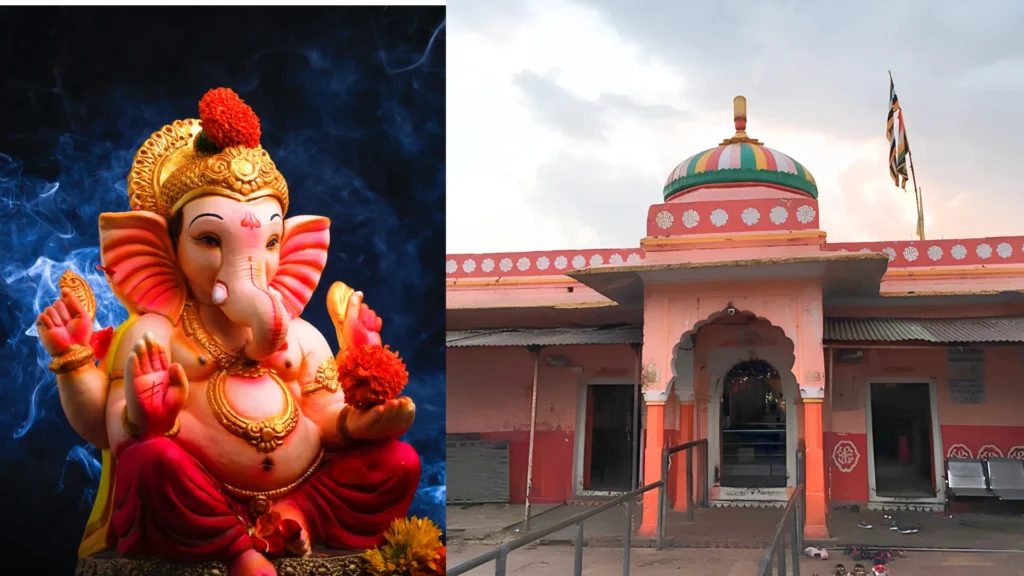
The history of Trinetra Ganesh Temple cannot be told apart from the history of Ranthambore Fort itself, because the temple stands pressed against the fort’s massive walls, high above the forests of Sawai Madhopur. Historical accounts place the origins of the fort with the Chauhan rulers, who held Ranthambore for centuries and made it one of the most formidable strongholds in Rajasthan. The Mughal chronicler Abul Fazl later described Ranthambore as an armoured fort, a fortress so completely wrapped in hills and walls that no enemy could easily touch it. That reputation was earned in blood, and the temple that pilgrims visit today was born in the middle of the fort’s most desperate hour.
That hour came between 1299 and 1301 CE, when Alauddin Khilji, the Sultan of Delhi, laid siege to Ranthambore during his campaign against Hammir Dev Chauhan (हम्मीर देव चौहान), the fort’s celebrated ruler. This siege is documented history, one of the defining military episodes of medieval Rajasthan. The fort held out for months while supplies inside its granaries slowly ran down. Local accounts remember that Khilji’s forces failed in attempt after attempt before the fort finally fell in 1301, and that the women of the fort committed jauhar rather than surrender. Hammir Dev’s stand at Ranthambore is still recited in the region as a story of honour kept at the highest price.
It is inside this documented siege that the temple’s own account begins, and here the record passes from history into faith. Temple tradition holds that as the granaries emptied, Lord Ganesha (भगवान गणेश) appeared to Hammir Dev in a dream and assured him that his troubles would ease, directing him to a spot along the fort wall. There, tradition says, the king found a svayambhu (स्वयंभू) murti of Ganesh Ji with three eyes, self manifested from the hillside, a form devotees now worship as Trinetra Ganesh. Temple tradition attributes the construction of the temple to Hammir Dev around 1300 CE, built in the red sandstone of Karauli to enshrine the murti where it appeared. Devotees have carried this account forward for over seven centuries, and it remains the living heart of the temple’s identity.
The centuries since have only deepened the temple’s standing. Temple tradition also remembers that Raja Vikramaditya would travel to Ranthambore to offer darshan on Wednesdays, the day sacred to Lord Ganesha, a practice devotees continue to this day. In 2013, Ranthambore Fort was inscribed as part of the Hill Forts of Rajasthan, a UNESCO World Heritage listing, formally recognising the walls that have sheltered Trinetra Ganesh Ji through siege, empire, and time. Today the fort belongs to heritage and the forest belongs to the tigers, but the temple remains what it has always been, an active place of worship where the aarti has not fallen silent since the days of the Chauhans.
Architecture of Trinetra Ganesh Temple (त्रिनेत्र गणेश मंदिर की वास्तुकला)
The architecture of Trinetra Ganesh Temple is unlike almost any other Ganesh temple in India, because here the temple was not built first and the deity installed later. Temple tradition holds that the svayambhu (स्वयंभू) murti of Trinetra Ganesh emerged from the hillside itself, and the structure was raised around that sacred spot to enshrine it.
Temple tradition attributes this construction to Hammir Dev Chauhan around 1300 CE, using the red sandstone of Karauli, the same warm stone that colours so much of eastern Rajasthan’s temple heritage. The result is a temple that does not stand apart from its landscape but grows out of it, with the rock of the hill forming the very heart of the garbhagriha (गर्भगृह).
What strikes devotees most during darshan is the form of the murti. Trinetra Ganesh Ji is worshipped here as a mukharvind (मुखारविंद), the sacred face alone, rising directly from the hill. There are no arms, no torso, and no conventional full-bodied pratima. The three eyes for which the temple is named are rendered on this face, and it is this mukh that receives the shringar, the vermilion, and the daily aarti.
Within the same sanctum, Lord Ganesha (भगवान गणेश) gives darshan with his complete family. His consorts Riddhi and Siddhi (रिद्धि सिद्धि) are enshrined on either side, his sons Shubh and Labh (शुभ लाभ) are seated with them, and his vahan, the mushak, keeps its faithful place nearby. This gathering of the entire divine family in one garbhagriha is the temple’s most distinctive feature, and devotees travel across India for this darshan alone.
The temple’s position within Ranthambore Fort shapes its architecture in another unusual way. The structure is built directly against the fort’s thick defensive walls, on the western side of the hilltop, with the forests of Ranthambore Tiger Reserve falling away beyond the ramparts. Because the temple touches the wall, devotees cannot walk a simple circle around the sanctum.
Temple tradition resolves this beautifully: the parikrama (परिक्रमा) of Trinetra Ganesh Ji is performed by circling the whole of Ranthambore Fort, so that the fortress itself becomes part of the act of worship. Few temples anywhere ask the pilgrim to embrace an entire UNESCO World Heritage fort in a single pradakshina, and it is this union of stone, hill, and devotion that makes the architecture of Trinetra Ganesh Temple feel less like a building and more like a landscape offered to Bhagwan.
Sacred Stories of Trinetra Ganesh Temple
The sacred stories of Trinetra Ganesh Temple reach back to the Dwapar Yuga, and devotees have carried them forward with unbroken love. Temple tradition holds that when Shri Krishna married Rukmini Ji, invitations went out to all, but Ganesh Ji was not invited. His mushak then softened the earth along the wedding route, and Shri Krishna’s chariot sank into the ground. Realising what had happened, Shri Krishna lovingly sought Ganesh Ji’s forgiveness and declared that every shubh karya would begin with an invitation to him, and temple tradition remembers that the very first wedding invitation was then offered to Trinetra Ganesh at this spot in Ranthambore. Tradition preserved in the Rukmini granth is cited by the temple priests for the svayambhu nature of the murti. Temple tradition also holds that Shri Ram, while travelling toward Lanka in the Treta Yuga, performed abhishek of this same three-eyed form, and that Lord Shiva bestowed his third eye upon his son, which is why devotees behold Ganesh Ji here as Trinetra, the Three-Eyed Ganesha.
This is why the wedding invitation tradition lives on at Ranthambore Ganesh Temple to this day. From every corner of Rajasthan and far beyond, families post the first card of every marriage to Trinetra Ganesh Temple Ranthambore inside Ranthambore Fort, and the temple priests read each letter aloud before Lord Ganesha. Many devotees affectionately call him the Ganesh Ji of weddings.
Why Lord Ganesha is Worshipped First (Pratham Pujya)
Across the Hindu tradition, Lord Ganesha is revered as Pratham Pujya, the deity worshipped first before any auspicious beginning, and this belief is universal to Sanatan Dharma rather than special to any one Ganesh temple. Hindu tradition holds that Lord Shiva blessed his son with the boon that no puja, no vivah, and no new venture would bear fruit unless Ganesh Ji received the first worship.
As Vighnaharta, the remover of obstacles, and as the giver of buddhi, saubhagya, and success, he clears the path before every journey begins. This is why every mangal karya in a Hindu home, from a grihapravesh to a wedding to the opening of a new shop, begins with the smaran of Ganesh Ji. The first diya, the first mantra, and the first invitation belong to him, and devotees trust that once Ganesh Ji First Worship is offered, whatever follows unfolds under his protection.
At Trinetra Ganesh Temple in Sawai Madhopur, this universal faith takes living form. Because temple tradition holds that Shri Krishna offered the first wedding invitation to Ganesh Ji here, devotees feel that darshan of Trinetra Ganesh is the truest way to honour Pratham Pujya, and they arrive before every new beginning to place their hopes at his feet.
Darshan and Aarti Timings of Trinetra Ganesh Temple
Darshan & Aarti Timings
Daily worship at Trinetra Ganesh Temple follows the full five-aarti tradition of a priest-served temple, while visitor access is shaped by the forest route that leads to Ranthambore Fort.
| Aarti | Reported Timing | Notes |
|---|---|---|
| Prabhat Aarti | Early Morning | The first aarti of the day, as the fort wakes |
| Shringar Aarti | 9:00 AM | Consistently reported across sources |
| Bhog Aarti | 12:00 Noon | Midday bhog offered to Trinetra Ganesh Ji |
| Sandhya Aarti | 6:30 PM (Summer) · 5:45 PM (Winter) | Shifts with the season, following sunset |
| Shayan Aarti | 8:00 PM | The final aarti, performed by the temple priests |
| Window | Timing | Why |
|---|---|---|
| Route Opens Open | Early Morning | Jeeps and taxis begin running from Sawai Madhopur toward the Sherpur checkpoint from the early hours |
| Best Darshan Time For a peaceful visit | Morning Hours | Cooler walk through the fort gates, quieter sanctum, and the Shringar Aarti at 9:00 AM if you time it well |
| Recommended Return Leave the fort | Before Dusk | The approach road passes through forest area and entry is not permitted after evening; complete the return before dark |
| Busiest Days Expect crowds | Wednesdays & Shukla Chaturthi | Wednesday is sacred to Lord Ganesha; Shukla Paksha Chaturthi draws mela-scale crowds each month |
Best Time to visit – Trinetra Ganesh Temple
Best Time to Visit Trinetra Ganesh Temple
Trinetra Ganesh Temple sits inside Ranthambore Fort, reached by a road that passes through forest area, so season shapes the whole experience here more than at a city temple. October to March offers the most comfortable weather for the fort walk, while the Ganesh Chaturthi mela in Bhadrapada is when lakhs of devotees make Ranthambore the centre of Ganesh bhakti in Rajasthan.
Cool, clear months when the walk through the fort gates is at its easiest and the Aravalli views from the ramparts are at their best. This is also peak season for Ranthambore tiger safaris, so pilgrimage and wildlife combine naturally in a single trip. Wednesdays and Shukla Chaturthi days still draw heavy darshan crowds even in these months.
On Bhadrapada Shukla Chaturthi, the Ganesh Chaturthi mela fills Sawai Madhopur with lakhs of devotees, many arriving on foot from distant districts, some performing dandvat along the way. Free bhandaras serve pilgrims, extra roadways buses run, and the whole fort resounds with jaikaras of Ganpati Bappa. This is the temple at its most alive, and its most crowded.
Rajasthan summers are severe, and the fort stones hold the heat of the day. If you visit in these months, start early in the morning, carry water for the walk, and complete darshan before midday. The reward is a quieter sanctum and an unhurried darshan of Trinetra Ganesh Ji.
During the Mela, Arrive Early and Expect Managed Access
On Bhadrapada Shukla Chaturthi, the single forest road to Ranthambore Fort carries lakhs of devotees, and the forest department places tight security across the route. Extra roadways buses run from Sawai Madhopur during the mela, free bhandaras operate along the way, and darshan queues stretch long through the fort gates. Reach as early in the morning as possible, keep the return before dusk in mind, and remember that mela dates shift each year with the tithi, so confirm the current year’s dates before travelling.
Festivals and Mela Celebrate at Trinetra Ganesh Temple
Festivals and Mela at Trinetra Ganesh Temple
The festival year at Trinetra Ganesh Temple (त्रिनेत्र गणेश मंदिर) turns on one grand event: the Ganesh Chaturthi mela on Bhadrapada Shukla Chaturthi, when lakhs of devotees fill Ranthambore. Around it runs a steady devotional rhythm of monthly Chaturthi gatherings, Wednesday darshan, and a wedding season unlike any other temple in India.
| Occasion | When | What to Expect |
|---|---|---|
|
Ganesh Chaturthi Mela
Bhadrapada Shukla Chaturthi
|
August – September | The grandest days of the temple’s year. Lakhs of devotees arrive from across India, many walking from distant districts and some coming dandvat. Free bhandaras run along the route, extra roadways buses operate from Sawai Madhopur, and the fort echoes with jaikaras of Ganpati Bappa amid bhajans and cultural programmes. |
|
Vinayak Chaturthi Darshan
Shukla Paksha Chaturthi
|
Every month | The Chaturthi that follows Amavasya draws crowds that feel like a small mela in themselves, as devotees mark the tithi most beloved to Lord Ganesha with special darshan at the fort. |
|
Wednesday Darshan
Budhwar — Ganesh Ji’s day
|
Every Wednesday | Wednesday is sacred to Ganesh Ji, and temple tradition remembers that Raja Vikramaditya himself would come for Wednesday darshan. Expect steady pilgrim flow through the fort gates all day. |
|
Wedding Invitation Season
The first card to Ganesh Ji
|
Vivah seasons through the year | In keeping with the tradition of Shri Krishna and Rukmini, families across India post the first wedding card of every marriage to Trinetra Ganesh. In peak vivah season the temple receives sackfuls of invitations daily, each read aloud to Bhagwan by the temple priests. |
Your Invitation Reaches Ganesh Ji by Post
Devotees who cannot travel to Ranthambore for a wedding or mangal karya send their invitation cards and letters by post, and they arrive from every corner of the country in every language. The temple priests read these letters before Trinetra Ganesh Ji, which is why many devotees lovingly call him the Ganesh Ji of weddings. Beyond invitations, devotees also write to him with their prayers and difficulties, trusting Vighnaharta to hear them. The temple’s postal address is given in the visitor information on this page.
How to Reach Trinetra Ganesh Temple
How to Reach Trinetra Ganesh Temple, Ranthambore
Trinetra Ganesh Temple sits inside Ranthambore Fort, about 13 km from Sawai Madhopur railway station. The route is the same one that leads to Ranthambore Fort and the National Park: through the Sherpur checkpoint and then along a forest road to the fort parking area, from where the final stretch to the temple is on foot through the fort gateways. No tiger safari booking is needed to visit the temple.
By Train
The Easiest OptionSawai Madhopur Junction lies on the busy Delhi–Mumbai line, with direct trains from Delhi, Jaipur, Mumbai, and many other cities. The station itself welcomes you with tiger murals, a reminder of where you have arrived.
- Direct trains from Delhi, Jaipur & Mumbai
- Shared jeeps and taxis wait outside the station for the fort route
- Station to fort parking: ~13 km by road
By Jeep / Taxi
From Sawai MadhopurBecause the temple route is the same road that serves Ranthambore Fort and the National Park, shared jeeps and cabs are easy to find and run at nominal shared fares. They begin early in the morning and operate through the daylight hours only.
- Board near the railway station or bus stand
- Route: station → Sherpur checkpoint → fort parking
- Return jeeps available from the parking area till evening
By Road
Private Vehicles AllowedSawai Madhopur is about 160 km from Jaipur and 380 km from Delhi by road. Private vehicles can drive the full route through the Sherpur checkpoint up to the Ranthambore Fort parking area; only the last stretch is on foot.
- Jaipur → Sawai Madhopur: ~160 km
- Delhi → Sawai Madhopur: ~380 km
- In town: follow the Ranthambore Road toward Sherpur
By Air
Nearest AirportJaipur International Airport is about 156 km from Sawai Madhopur and is the most convenient airport for the temple. From Jaipur, continue by train or road; the rail option is often the smoother of the two.
| From | Distance | Travel Time |
|---|---|---|
Sawai Madhopur Junction |
~13 km | ~30 – 40 min + fort walk |
Jaipur (by road) |
~160 km | ~3.5 – 4 hr |
Delhi (by road) |
~380 km | ~7 – 8 hr |
Jaipur International Airport |
~156 km | ~3.5 – 4 hr by road |
| From | Distance |
|---|---|
Shri Chauth Mata Temple, Chauth Ka Barwara |
~24 km |
Ghushmeshwar Mahadev Temple, Shivad |
~48 km |
Rameshwaram Dham (Triveni Sangam) |
~60 km |
|
Trinetra Ganesh Temple, Ranthambore Fort, Sawai Madhopur, Rajasthan
|
Open in Google Maps → |
Combine Darshan with Ranthambore Fort, and Book Safaris Officially
Since the walk to the temple passes through Ranthambore Fort itself, keep an extra hour to take in the ramparts of this UNESCO World Heritage fort on the same visit. If you also plan a tiger safari, remember the safari is a separate, bookable activity: reserve it only through the official Rajasthan portal (obms-tourist.rajasthan.gov.in) rather than private resellers. For a fuller pilgrimage circuit, Shri Chauth Mata Temple is about 24 km from Sawai Madhopur and Ghushmeshwar Mahadev, the twelfth Jyotirlinga by temple tradition, about 48 km.
Pilgrim Essentials, Accessibility & Practical Tips – Trinetra Ganesh Temple
Pilgrim Essentials, Accessibility & Practical Tips
Everything you need to know before visiting Trinetra Ganesh Temple, Ranthambore.
Practical Guide to Visiting Trinetra Ganesh Temple
Ranthambore Fort, Sawai Madhopur, Rajasthan
🪔 Pilgrim Essentials
-
Darshan Here Is of the Mukh Alone
Trinetra Ganesh Ji is a svayambhu murti emerging from the hill itself, so darshan is of the sacred mukharvind, the face with three eyes, together with Riddhi Siddhi, Shubh Labh, and the mushak. Knowing this before you enter the garbhagriha makes the darshan all the more moving.
-
Buy Prasad at the Temple Itself
Shops beside the temple sell modak and laddu, Ganesh Ji’s beloved bhog, along with puja samagri. There is no need to carry prasad up through the fort; buy fresh at the top and offer it at the sanctum.
-
Mannat Threads Are a Living Tradition Here
Devotees tie mannat ke dhaage at the temple, entrusting their wishes to Vighnaharta, and return to untie them when the wish is fulfilled. Devotees hold that Trinetra Ganesh Ji Maharaj fulfils every sincere mannat placed before him.
-
Bringing a Wedding Card? You Are in the Right Place
Families carry the first invitation card of every vivah to Trinetra Ganesh Ji in person, continuing the tradition of Shri Krishna and Rukmini. If you cannot come, the card can be posted; the temple priests read every letter aloud before Bhagwan.
-
The Parikrama Circles the Entire Fort
Because the temple stands against the fort wall, the parikrama of Ganesh Ji is performed around the whole of Ranthambore Fort. It is a long undertaking through forest surroundings, so attempt it only with time in hand, in daylight, and ideally in the cooler months.
-
Darshan Is Free — No Safari Booking Needed
There is no fee for darshan, and visiting the temple does not require a tiger safari permit. If checkpoint charges apply on the fort route, we will confirm them on ground and update this page; anything you spend on prasad is entirely optional.
♿ Accessibility Notes
-
Vehicles Reach the Fort Parking, Not the Temple
Private vehicles, jeeps, and taxis come as far as the Ranthambore Fort parking area via the Sherpur checkpoint. From there the path is on foot through the fort’s historic gateways, with stretches of stone steps along the climb.
-
Palki Assistance for Elderly Devotees
For pilgrims who cannot manage the walk, palki assistance is reported to be available from the parking area. Confirm availability on arrival, especially on crowded Wednesdays and Chaturthi days when demand is high.
-
Wear Walking Shoes, Carry Little
The climb passes over old fort stone that grows warm by midday. Comfortable walking shoes, a water bottle, and a light bag are all you need; heavy luggage stays in your vehicle at the parking.
-
Seniors and Children: Start Early, Go Slow
The gradient is manageable when taken unhurried, and morning hours offer shade and cooler stone. Keep children close through the gateways and near the ramparts, and let elders set the pace with rest stops at the gates.
🧭 General Practical Tips
-
Respect the Forest Route Discipline
The road to the fort passes through forest area, so the route operates in daylight hours only and entry is not permitted after evening. Plan darshan so that your return to Sawai Madhopur is complete before dusk.
-
Mind the Langurs and Monkeys
Langurs and monkeys live all along the fort path and around the temple. Keep prasad bags closed and held firmly, avoid feeding by hand, and keep phones and spectacles secure, especially with children.
-
Summer and Monsoon Need Their Own Care
In summer, finish the climb before midday and carry water; the fort stone holds the heat. In monsoon, the stone steps can turn slippery and the greenery draws you to the edges, so walk carefully and stay clear of the ramparts.
-
Wednesdays and Chaturthi Bring Mela-Scale Crowds
Budhwar is Ganesh Ji’s own day, and the Shukla Paksha Chaturthi each month draws crowds that feel like a small mela. For an unhurried darshan, choose any other weekday morning; for the full devotional atmosphere, come on these very days.
-
Adding a Safari? Book Only Through the Official Portal
The tiger safari is a separate activity with its own permits. Book only through Rajasthan’s official portal, obms-tourist.rajasthan.gov.in, and not through private resellers. Morning safari and afternoon darshan, or the reverse, combine into one unhurried day.
Nearby Temples and Places to visit – Trinetra Ganesh Temple
Nearby Temples & Places to Visit
A darshan of Trinetra Ganesh Ji places you at the heart of Sawai Madhopur’s sacred landscape — with the fort and forest around you, the town’s old temples on your return route, and the district’s great pilgrimage sites within a day’s reach.
The walk to Trinetra Ganesh Ji passes through this UNESCO World Heritage fort itself, part of the Hill Forts of Rajasthan listing. Keep an extra hour for the historic gateways, ramparts, and sweeping views over the forests of the tiger reserve.
The tiger reserve that surrounds the fort is among India’s most famous, and many pilgrims pair morning darshan with an afternoon safari. The safari needs its own permit — book only through the official Rajasthan Tourism channels, never private resellers.
A temple of Lord Shiva set amid the hills on the way toward Ranthambore, where many devotees stop for darshan while travelling between Sawai Madhopur and the fort. A natural companion to the Trinetra Ganesh yatra.
A temple of Bhairav Ji in his paired Kala and Gora forms, woven into the daily devotional life of Sawai Madhopur. An easy darshan to add on your return from the fort.
A revered Jain temple of Sawai Madhopur, known among devotees for the chamatkars associated with it and visited by pilgrims of all traditions. It sits conveniently close to the town side of your journey.
The hilltop temple of Chauth Mata, the presiding devi of Chauth Ka Barwara, deeply tied to Karwa Chauth and Sankashti Chaturthi vrats across the region. One of the district’s most visited pilgrimage sites.
Revered by temple tradition as the twelfth and final Jyotirlinga, where the katha of Mata Ghushma and Lord Shiva’s grace is kept alive in Shivad. A darshan many pilgrims combine with Trinetra Ganesh in a single district yatra.
The sacred sangam where the Banas meets the Chambal, with the temple of Lord Shiva watching over the confluence. A serene teerth for those extending their pilgrimage deeper into the district.
The complete guide to temples across Sawai Madhopur district — from Trinetra Ganesh at Ranthambore Fort to Chauth Mata, Ghushmeshwar Mahadev, and the sacred sites of every tehsil, with seasonal and practical guidance for the whole district.
Frequently Asked Questions related to Trinetra Ganesh Temple Ranthambore
- Recorded on-site interview with the temple priests of Trinetra Ganesh Temple — primary source for the svayambhu nature of the murti, the mukharvind-only darshan, the Rukmini granth reference cited by the priests, the first wedding invitation tradition of Shri Krishna and Rukmini, the reading of devotees’ letters before Bhagwan, and the mannat thread tradition
- On-site video documentation of the temple and fort route — multiple independently recorded visits covering the Sherpur checkpoint route, the fort parking area, the walk through the fort gateways, the garbhagriha with Riddhi Siddhi, Shubh Labh, and the mushak, the prasad and modak shops at the temple, the langurs along the path, and the palki assistance for elderly devotees — cross-referenced across sources for consistency before inclusion
- Published accounts of the temple and the siege of Ranthambore — used for the documented history of the 1299–1301 CE conflict between Hammir Dev Chauhan and Alauddin Khilji, the Karauli red sandstone construction attributed by temple tradition to c. 1300 CE, the five daily aartis as reported, and the Ganesh Chaturthi mela — cross-checked across multiple independent sources, with conflicting figures excluded rather than averaged
- UNESCO World Heritage Centre — Hill Forts of Rajasthan — reference for Ranthambore Fort’s inscription as part of the World Heritage listing (2013)
- Government of Rajasthan — Sawai Madhopur District Portal and Rajasthan Tourism, Ranthambore — administrative reference and official safari information
- Google Maps & Google Reviews — Trinetra Ganesh Temple, Ranthambore Fort listing — used for location verification inside Ranthambore Fort and distance confirmation from Sawai Madhopur Junction (~13 km), Jaipur (~160 km), Delhi (~380 km), Jaipur International Airport (~156 km), Chauth Mata Temple (~24 km), Ghushmeshwar Mahadev Temple (~48 km), and Rameshwaram Dham (~60 km). Cross-referenced across multiple reviews for consistency before inclusion.
- IndiaMandir editorial team — fact verification and entity disambiguation, including the separation of the documented siege history from temple tradition, the distinction between Ranthambore Fort, Ranthambore National Park, and the temple, the disambiguation from Moti Dungri, Siddhivinayak, and other Ganesh temples, and the exclusion of unverifiable claims found in other published sources. Two items remain under active verification with the temple: the exact aarti and darshan timings, and the complete postal address with PIN code. This page will be updated as each is confirmed.