Naldeshwar Mahadev Temple, Alwar
A cave shrine to Lord Shiva tucked into the Aravalli hills near Madhopur, reached only on foot and best known for its monsoon waterfall. A complete guide for devotees, trekkers, and nature lovers.
About Naldeshawar Temple
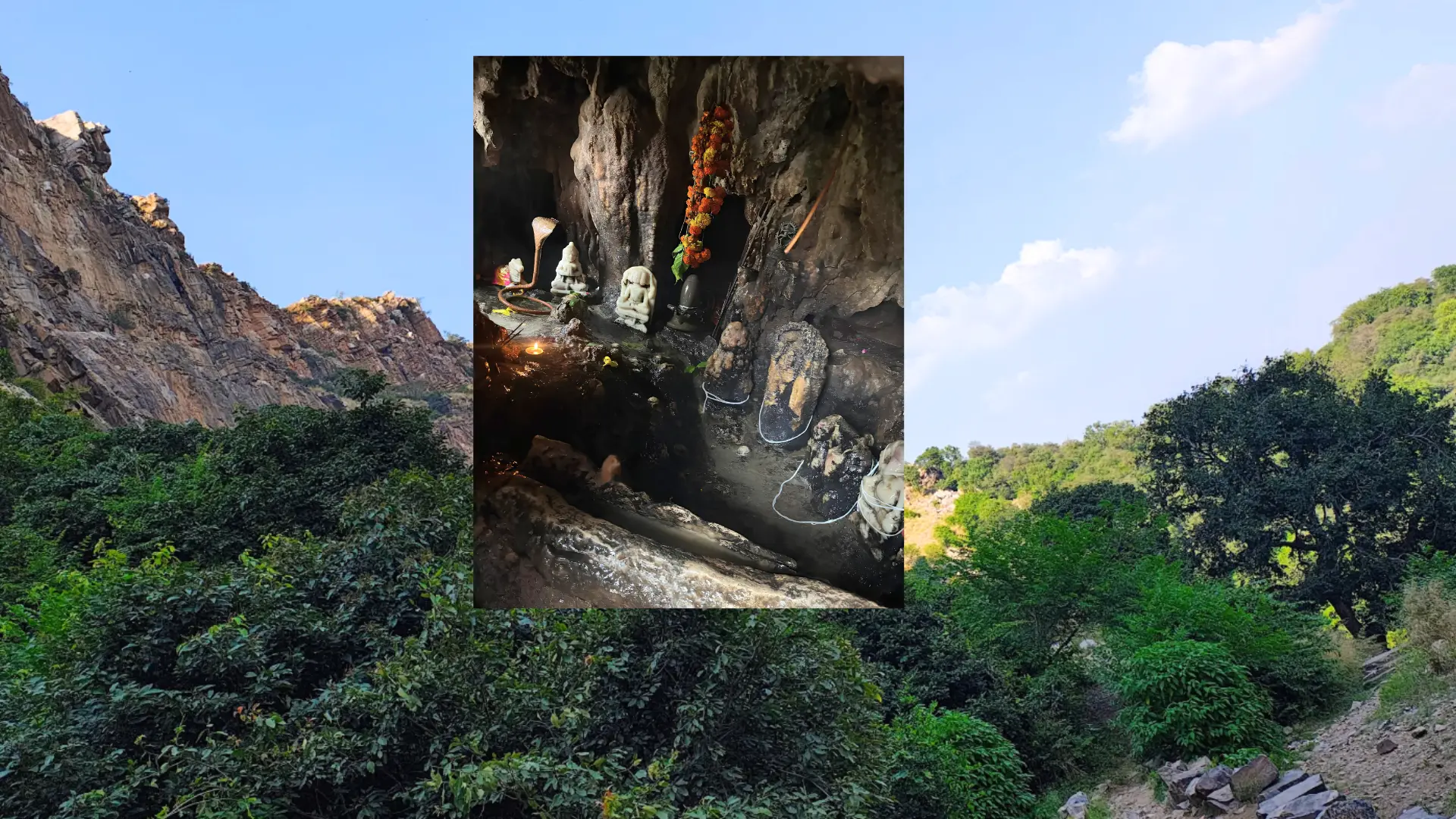
Naldeshwar Mahadev Temple — also widely searched as Naldeshwar Shrine, Naldeshwar Temple, or Naldeshwar Waterfall — is a cave temple dedicated to Lord Shiva, tucked into the Aravalli Hills south of Alwar city, roughly 24–32 km away depending on the route (sources vary). The temple houses a naturally formed Shivling and is reached only on foot, via a trek that ranges from about 1 km to 5 km depending on where you park, followed by a steep stone stairway of 200 or more steps. It’s best known for its seasonal monsoon waterfall and twin natural ponds, and draws its heaviest crowds during Shravan, especially on Sawan’s last Monday. Entry is free, and the temple is typically open from around 6 AM to 6 PM.
Everything Covered in This Guide
Navigate to any section — history, mythology, trek details, timings, or travel tips — all in one comprehensive guide.
Temple at a Glance
History
Architecture & Cave Shrine
Deities Worshipped
Legends & Religious Beliefs
Waterfall & Trekking Route
Best Time to Visit
How to Reach
Darshan & Aarti Timings
Rules for Visitors
Practical Tips & Cautions
Nearby Temples & Places
FAQs
Temple at a Glance – Naldeshwar Temple Alwar
Temple at a Glance
Complete quick-reference information about Naldeshwar Mahadev Temple, Alwar — for devotees, trekkers, and travellers.
| Temple Identity | ||
| 🏷️ | Official Name | Naldeshwar Mahadev Temple |
| 📝 | Also Known As | Naldeshwar Shrine Naldeshwar Temple Naldeshwar Waterfall |
| 📍 | Location | Near Madhopur Village, Sariska–Alwar Road, Alwar District, Rajasthan |
| Deity & Worship | ||
| 🙏 | Primary Deity | Lord Shiva — worshipped here as Naldeshwar Mahadev |
| ✨ | Deity Form | Swayambhu Shivling — naturally formed; regarded as self-manifested per local devotional tradition |
| History & Setting | ||
| 📅 | Period of Construction | 18th Century — traditionally dated (temple structure built to shelter the natural lingam); not ASI-verified |
| 🏔️ | Setting | Cave shrine on a hillside in the Aravalli Range, with two natural spring-fed ponds and a seasonal waterfall |
| 🔖 | ASI Protected | Not ASI Protected |
| Access & Trek | ||
| 🚫 | Vehicle Access | No Vehicle Access to Temple — park at Madhopur, continue on foot |
| 🥾 | Trek Distance | Approx. 1–5 km — varies by parking/drop point; sources are not consistent |
| 🪜 | Final Approach | Rock-cut stone stairway (commonly cited as ~200 steps, with some accounts of more) or an alternate gravel trekking path |
| How to Reach — Distances | ||
| 🚗 | From Alwar City | Approx. 24–32 km — figures vary across sources |
| 🚆 | Nearest Railway | Alwar Junction |
| ✈️ | Nearest Airport | Jaipur International Airport |
| Visitor Information | ||
| 🕰️ | Visiting Hours | 6:00 AM – 6:00 PM All Days |
| 🎟️ | Entry Fee | Free Entry |
| 🌧️ | Best Time to Visit | Shravan / Monsoon (Jul–Sep) — for the waterfall and ponds at their fullest |
History of Naldeshwar Mahadev Temple (नलदेश्वर महादेव मंदिर)
Naldeshwar Mahadev Temple, also known locally as Naldeshwar Shrine, has no dated inscription, land grant, or ASI record establishing exactly when it was founded. Websites and local sources commonly describe the temple as dating to the 18th century, but this figure appears to be a traditional estimate passed down through repetition rather than a documented fact tied to any inscription, dynasty, or ruler. No verified historical record confirms who built the temple or under what patronage.
What can be said with more confidence is that the site centers on a natural rock cave in the Aravalli hills, within which a naturally formed rock is worshipped as a Shivling (शिवलिंग). It is reasonable to assume that devotional use of this cave predates any built structure around it, since such natural rock formations are often worshipped long before a formal temple is constructed — but there is no way to verify how far back this worship actually goes. When asked about the temple’s age, even regular visitors and trekkers on the route describe it simply as a place that has “always been there,” without any specific date in living memory.
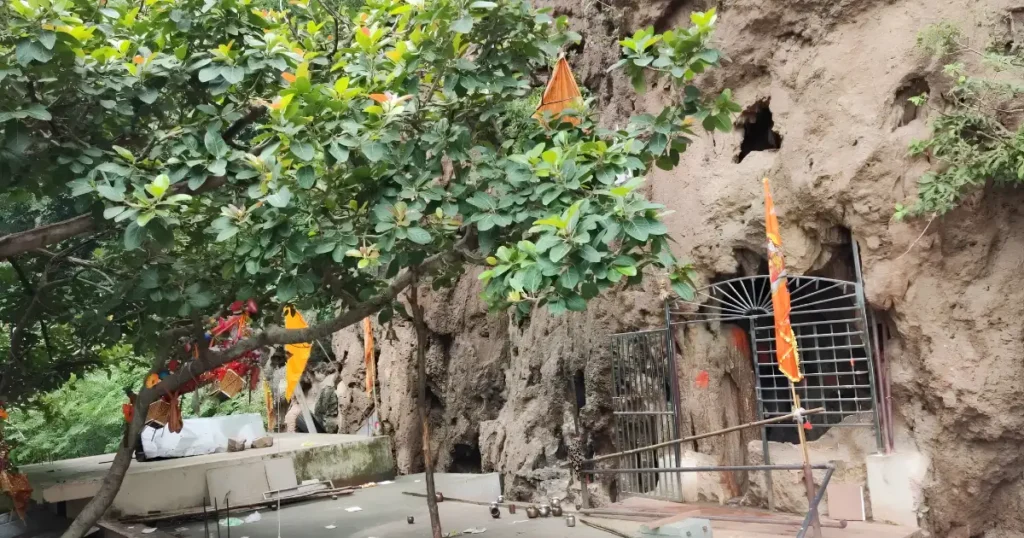
Over time, a small temple structure was added at the mouth of the cave, and the approach path was developed into a stone stairway to make the climb more manageable for pilgrims. These improvements appear to be the result of ongoing devotee and local effort rather than a single dated construction project, though this cannot be confirmed against any official record.
Within Alwar, Naldeshwar Mahadev holds an established place among Shiva devotees as one of several hill-based Shiva shrines in the Aravalli belt surrounding Alwar and Sariska, alongside sites such as Neelkanth Mahadev and Pandupol. Its importance is most visible during the month of Shravan (सावन), when the temple sees its heaviest footfall, particularly on the last Monday of the month.
Key Takeaway: No verified historical record documents the founding date or founder of Naldeshwar Mahadev Temple. The commonly cited “18th century” figure is a traditional estimate, not an inscribed or archaeologically confirmed date. The temple’s real significance lies in its continued role as an active Shiva pilgrimage and trekking site in Alwar.
Architecture of Naldeshwar Mahadev Temple
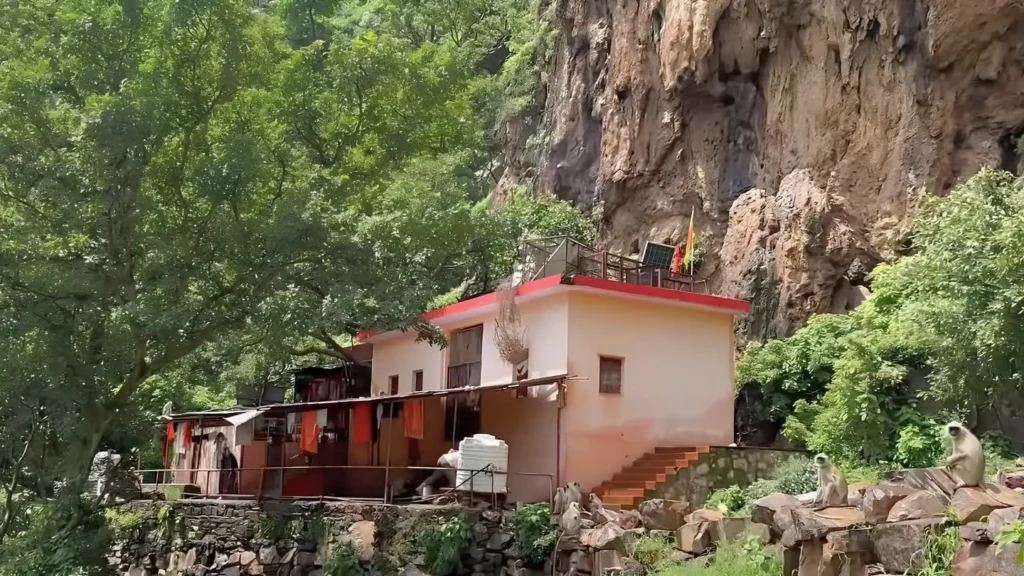
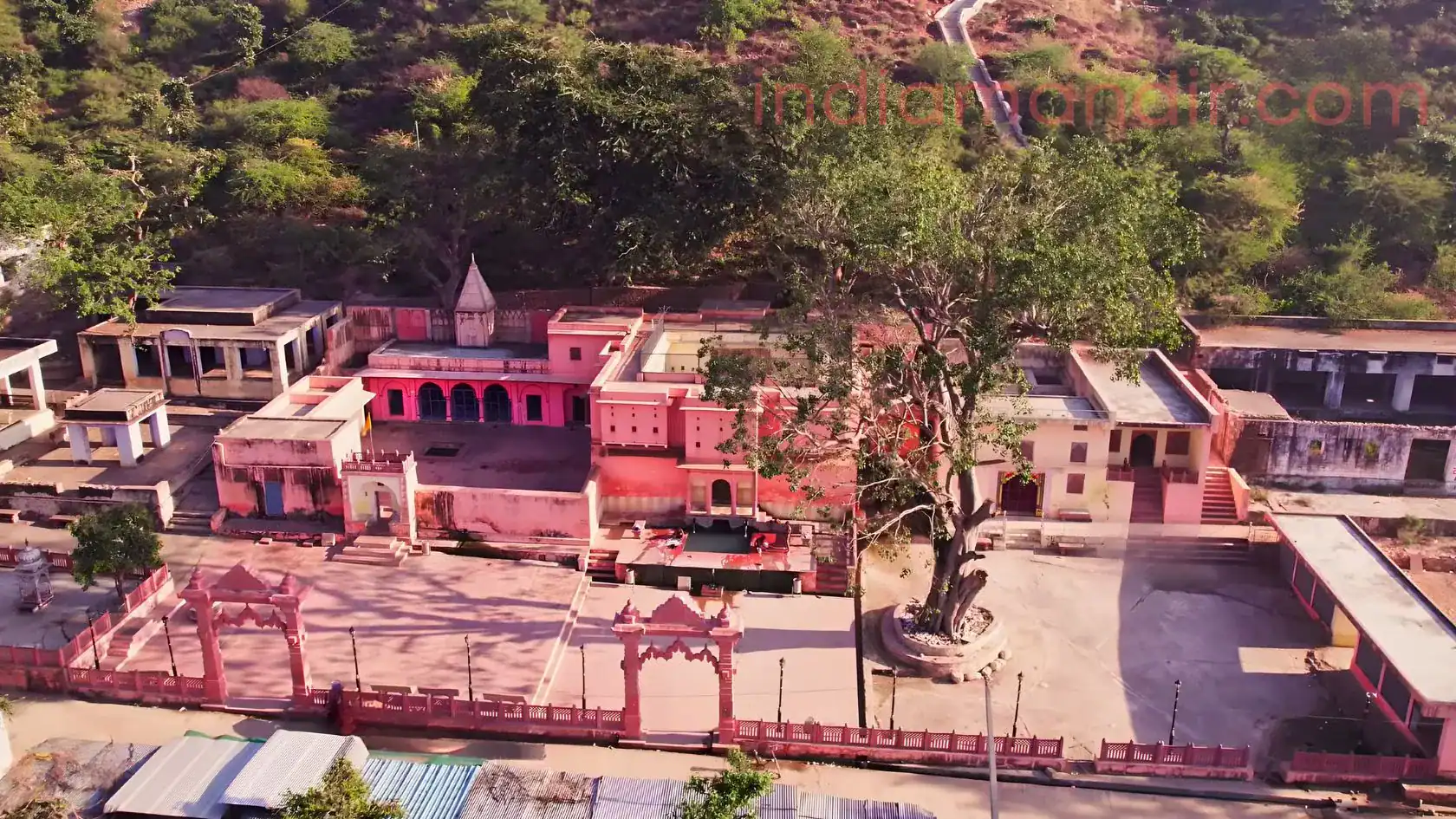
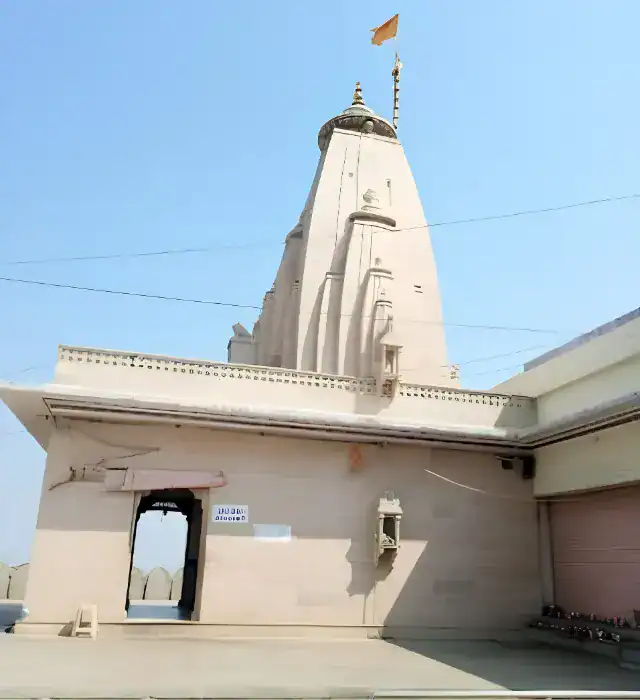
Unlike grand temples with towering spires and intricate carvings, Naldeshwar Mahadev Temple is admired for its natural simplicity. The temple is built around a small cave in the Aravalli Hills, where the sacred Shivling is enshrined. A modest temple structure has been constructed at the cave entrance, creating a peaceful space for devotees to offer prayers.
The journey to the shrine is part of the experience. Visitors reach the temple by climbing a steep stone staircase carved into the hillside. While the reported number of steps varies across different sources, the final stretch is noticeably steep and requires moderate physical effort.
Along the trekking route, you’ll encounter natural rock formations, small water pools (kunds), and a seasonal stream, especially during the monsoon. Devotees also leave simple offerings near the shrine as symbols of faith and fulfilled wishes, adding to the temple’s spiritual atmosphere.
Rather than elaborate architecture, Naldeshwar Mahadev Temple is known for its unique blend of nature and devotion. The cave shrine, rugged rocky landscape, and tranquil surroundings create a serene pilgrimage experience that sets this temple apart from many traditional Shiva temples in Rajasthan.
Key Takeaway: Naldeshwar Mahadev Temple is a simple cave shrine where the beauty lies in its natural setting. Surrounded by the rocky Aravalli hills and reached via a steep trek, it offers devotees a peaceful blend of spirituality, nature, and adventure.
Deities Worshipped at Naldeshwar Mahadev Temple
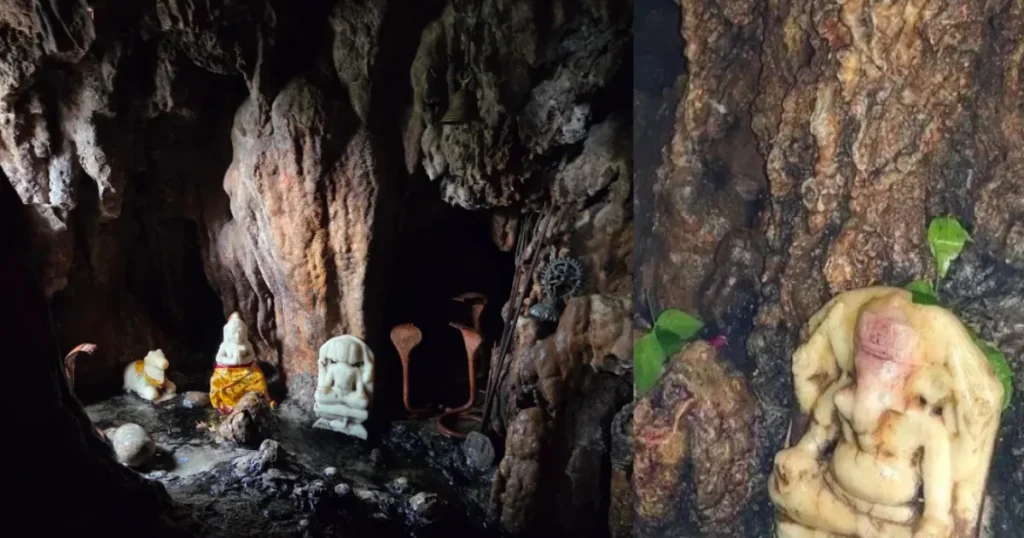
The presiding deity of the temple is Lord Shiva (भगवान शिव), worshipped here in the form of a Shivling housed inside the natural cave. Devotees refer to this form of Shiva as Naldeshwar Mahadev.
The Shivling is widely regarded by local devotees as swayambhu (स्वयंभू), meaning self-manifested rather than manually installed — a belief commonly attached to naturally occurring rock formations worshipped as lingams. This is a matter of devotional belief and local tradition; there is no independent archaeological or scientific documentation confirming the Shivling’s origin.
A further belief circulates among some visitors that a new Shivling forms naturally within the cave each monsoon season. This claim should be treated strictly as local folklore rather than fact — it has no verified geological or scientific basis, and is not corroborated by any authoritative source.
Some visitor accounts also mention old idols (मूर्तियां) inside or near the cave, which devotees believe emerged from the surrounding rock itself. As with the swayambhu belief, this is a matter of local devotional tradition rather than a verified historical claim. One on-ground account also mentions a separate, smaller shrine to Bhomiya ji (भोमियाजी) — a regional folk deity — along the same hillside; this has not been independently corroborated across multiple sources, so it is noted here only as an observed, single-source detail rather than a confirmed feature of the temple complex.
Key Takeaway: Naldeshwar Mahadev’s Shivling is worshipped as swayambhu according to local devotional belief, though this is not independently verified. Claims such as a new lingam forming each monsoon are local folklore, not documented fact, and are presented here only as belief.
Legends and Religious Beliefs
Local Tradition: Origin of the Name “Naldeshwar”
One theory repeated locally connects the temple’s name to a king or sage named Nal, said to have performed penance (तपस्या) at this site — with “Naldeshwar” understood as “Nal” plus “Ishwar” (Lord of Nal). However, even local guides and long-time visitors describe uncertainty about who this figure actually was or when he might have lived, and no textual or inscriptional source confirms this account. It remains an oral tradition rather than a documented history.
Local Tradition: Association with the Pandavas
A separate oral tradition links the site to the Pandavas’ period of exile (अज्ञातवास), a theme commonly attached to several hill and forest sites across the wider Alwar-Sariska region. This tradition is part of local belief and popular retelling; it is not supported by archaeological or textual evidence specific to this temple.
Local Tradition: A Reconciliation Legend
A further, less widely repeated oral account associates the location with an attempt by Lord Krishna to mediate between the Kauravas and Pandavas. This version appears in only limited local retellings and is not corroborated by other sources describing the temple. It is included here only as an existing oral tradition, not as an established legend.
Because these traditions differ from one another and are not documented in any authoritative historical or religious text specific to Naldeshwar Mahadev, no single accepted legend can be presented as “the” story of the temple. Visitors will likely encounter more than one version depending on who they ask.
Naldeshwar Mahadev Temple – Darshan Timings
Darshan & Aarti Timings
Visiting hours and worship practices at Naldeshwar Mahadev Temple — a hillside cave shrine reached only by trek, without a fixed temple-managed daily schedule.
| Window | Timing | Why |
|---|---|---|
| General Open Hours Open | 6:00 AM – 6:00 PM | Free, walk-in access — no gates or fixed closing ritual |
| Recommended Start Begin the trek | Before 10:00 AM | Leaves enough daylight for the trek up, darshan, and the return trek down |
| Recommended Return Leave the temple | Before 4:00 PM | The forested hill trail has no lighting; plan to be back at the parking point before dusk |
Naldeshwar Waterfall and Trekking Route
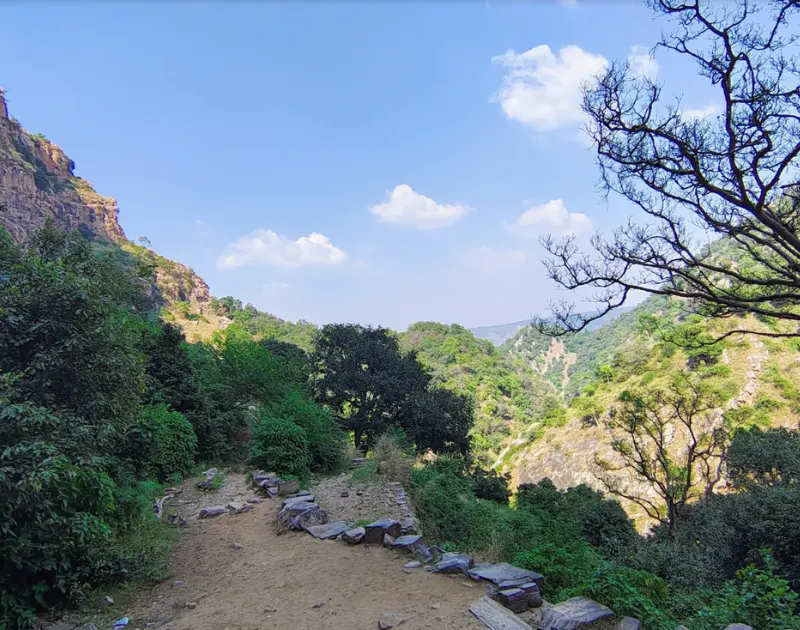
Naldeshwar Waterfall is a seasonal feature of the site, active mainly during the monsoon months of Shravan and Bhadrapada (roughly July to September). Rainwater collecting in the surrounding Aravalli hills feeds a stream that forms multiple small cascades and natural rock pools along the trekking path leading up to the temple. Outside the monsoon season, water flow is significantly reduced, and the waterfall may run dry or near-dry for much of the year.
The trek to the temple follows this stream for part of the route, crossing it at several points. During and after heavy rain, these crossings can become fast-moving and genuinely hazardous — administrative warning signage and, at times, a police or forest department presence have been reported near one particularly deep pool on the route, cautioning visitors against bathing there due to a real drowning risk. This is a practical safety consideration for anyone visiting during monsoon, not an incidental detail.
The trekking experience itself is a significant part of the site’s appeal. The path is rocky and uneven in places, involves multiple stream crossings, and passes through langur (लंगूर) troops that are generally harmless if not provoked or fed. Trekkers and pilgrims alike are drawn to the natural pools and cascades along the way, in addition to the temple itself at the end of the climb.
The waterfall and the temple attract two overlapping but distinct groups of visitors: devotees observing Shravan rituals — including the practice of collecting kanwar jal (कांवड़ जल) from the site’s water to carry to their home temples — and trekkers or nature visitors drawn primarily by the scenery and the physical challenge of the climb. The heaviest crowds coincide with the last Monday of Shravan, when both groups converge on the site.
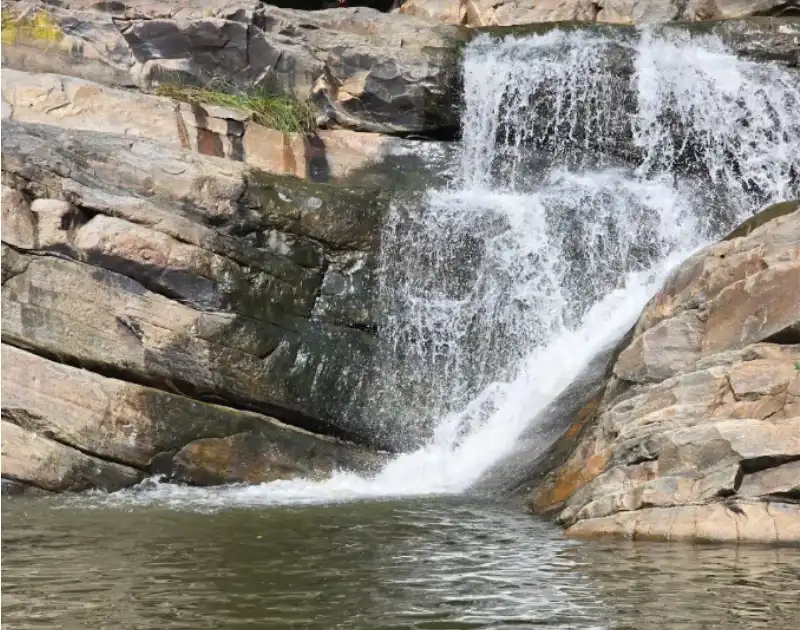
Key Takeaway: Naldeshwar Waterfall is a monsoon-dependent natural feature, best seen between July and September, but the same monsoon conditions that create it also bring real safety risks at stream crossings and deep pools. Visitors should treat the trek as a genuine hike, not a casual walk, particularly during the rainy season.
Best time to visit Naldeshwar Temple Alwar
Best Time to Visit Naldeshwar Mahadev Temple, Alwar
Naldeshwar Mahadev is a trek-based temple with no gate or seasonal closure, but the right season changes the experience completely. Monsoon (July–September) is when the waterfall and natural pools are genuinely worth the climb, while October to February offers a drier, safer trek for those who’d rather skip slippery rocks and stream crossings.
This is Naldeshwar Mahadev’s defining season. The seasonal waterfall and natural ponds along the trek are at their fullest, and the Shravan month brings a steady stream of devotees, many collecting kanwar jal (कांवड़ जल) from the site’s water. Crowds peak sharply on the last Monday of Shravan, with reported wait times of up to an hour for darshan. Stream crossings become genuinely hazardous after heavy rain — go in a group, avoid the deep pond near the route, and check conditions before starting the trek.
Cooler, drier conditions make this the more comfortable option for the climb, without the slippery rocks and stream crossings of the monsoon months. The waterfall itself will be reduced or dry by this point, so this window suits visitors prioritizing a safer trek and darshan over the scenic payoff. Maha Shivaratri (February–March) also falls near the tail end of this window and draws devotees, though it is not the temple’s primary festival period the way Shravan is.
The waterfall and ponds are typically dry or near-dry by this point, and daytime temperatures in the Alwar–Sariska belt regularly climb well above 40°C, with little shade along the rocky trail. The temple sits within the wider Sariska forest landscape, so the usual wildlife precautions for this region apply year-round — travel in a group, stay on the marked path, and avoid trekking alone. If you do visit in this window, start early and carry plenty of water.
| Festival | When | What to Expect |
|---|---|---|
|
Shravan Maas
|
July – August Monsoon month of Shravan |
The temple’s most important period. Devotees visit through the month, with kanwar jal collection a common practice. Crowds build steadily each Monday. |
|
Last Monday of Shravan
|
Late July – Late August Exact date varies by year |
The single busiest day of the year here. Thousands of devotees arrive, with prasad distribution reported at the temple and darshan wait times of up to an hour. Arrive early if visiting on this day. |
|
Maha Shivaratri
|
February – March Falgun Krishna Chaturdashi |
Also observed here, though on a smaller scale than the Shravan season. A quieter, cooler-weather alternative for devotees who prefer to avoid monsoon crowds and stream crossings. |
How to Reach Naldeshwar Mahadev Temple
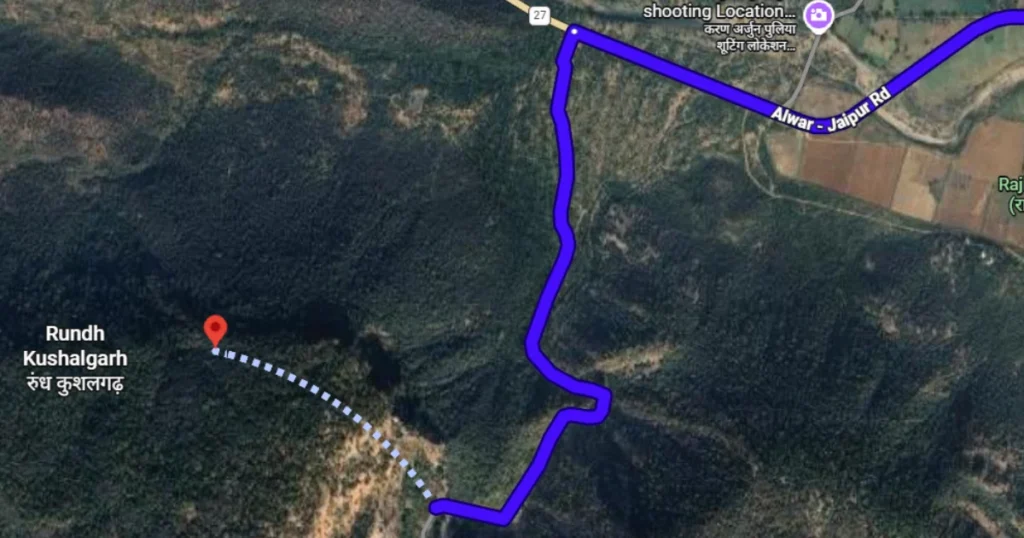
How to Reach Naldeshwar Mahadev Temple, Alwar
Naldeshwar Mahadev sits inside the Aravalli hills off the Alwar–Jaipur Road, and there is no vehicle access to the temple itself. You drive to a fixed parking point at Rundh Kushalgarh, then continue entirely on foot through forested terrain. A private vehicle is the only practical way to reach the trek’s starting point — there is no direct public transport to this access road.
By Air
Nearest AirportJaipur International Airport (JAI) is the nearest commercial airport, roughly in line with the 124–132 km Jaipur road distance. From the airport, hire a taxi toward Alwar via Viratnagar–Shahpura– Chandwaji–Achrol, then continue to Rundh Kushalgarh.
By Train
Nearest Railway StationAlwar Junction (AWR) is the nearest railhead, on the Delhi–Jaipur main line. From Alwar Junction, hire a private cab or bike for the onward ~30 km drive — there is no train service closer to the temple.
- From Delhi: ~2 to 2.5 hours by train to Alwar
- From Jaipur: ~2 to 2.5 hours by train to Alwar
By Road
Recommended RouteFrom Alwar city, take the Alwar–Jaipur Road toward Umren and Dharmpura, then turn off near the Karan Arjun Puliya shooting location and continue to Rundh Kushalgarh, where you park. From Jaipur, the route runs via Viratnagar, Shahpura, Chandwaji, and Achrol — this road does not pass through Sariska Tiger Reserve’s ticketed zone, though it does run through the same wider forest landscape, so standard wildlife precautions still apply.
- From Alwar: ~30 km · approx. 50–55 min
- From Jaipur: ~124–132 km · approx. 2 hr 30–40 min
By Bus
Up to Alwar OnlyRegular buses connect Alwar to Jaipur along the Alwar–Jaipur Road, but there is no confirmed bus stop at the Rundh Kushalgarh access point. Most visitors travel to Alwar first, then arrange a private taxi or bike for the remaining ~30 km, including the turnoff to the parking point.
- Alwar Bus Stand → Alwar–Jaipur Road (regular buses)
- Access road turnoff → Trek start: private vehicle only
| From | Distance | Travel Time |
|---|---|---|
Alwar City |
~30 km | approx. 50–55 min |
Jaipur |
~124–132 km | 2 hr 30–40 min |
Jaipur Airport (JAI) |
~124–132 km | 2 hr 30–40 min |
Alwar Junction (AWR) |
~30 km | approx. 50–55 min |
Rundh Kushalgarh → Temple |
~2–3.5 km | on foot · 1–2 hours |
⚠️ On-foot trek distance from the parking point varies across visitor accounts, ranging from roughly 2 km to 5 km depending on the exact route taken and where a vehicle is parked. The figure above reflects the most commonly reported range. Delhi distance is not included here as it has not yet been independently confirmed for this specific route.
📍 Google Maps link for Rundh Kushalgarh / the temple to be added once confirmed.
Carry Everything You Need — There’s Nothing Beyond the Parking Point
Mobile network coverage is unreliable to absent once you’re on the trail. Carry water, snacks, and sturdy footwear from the start, since there is little to no shopping beyond the parking area. The temple sits within the wider Sariska forest landscape, so travel in a group rather than alone, and be aware that wildlife movement (including tigers) is a genuine possibility even though no forest permit or entry fee applies here.
📍 Google Maps Locations
Naldeshwar Mahadev has two distinct map pins — one for the temple itself and one for the waterfall/trekking access area. Use the correct one depending on what you’re navigating to.
Naldeshwar Mahadev Temple
Main cave shrine location
The temple pin itself — the cave shrine at the end of the trek, where darshan takes place.
Open in Maps →Naldeshwar Shrine Waterfall
Waterfall / trek access point
A separate pin marking the waterfall and trekking route — useful if you’re navigating to the trail rather than the temple pin directly.
Open in Maps →⚠️ These are two different pins for two different points along the same site — the temple and the waterfall/trek area are not at the same coordinates. Confirm which one matches your plan before setting off.
Practical Tips and Cautions – Naldeshwar Mahadev Temple
Practical Tips & Cautions
Everything you need to know before visiting Naldeshwar Mahadev Temple, Alwar.
Practical Tips to Visit Naldeshwar Mahadev Temple
Rundh Kushalgarh, Alwar District, Rajasthan
-
Wear Proper Trekking Shoes
The trail is rocky and uneven, with stream crossings and a steep stone stairway near the top. Comfortable, grippy trekking shoes make a real difference — several visitors have noted that sandals or bare feet are risky on the wet rocks.
-
Carry Sufficient Drinking Water
There is little to nothing available to buy once you’re on the trail. Carry enough water for the full trek, especially in summer months when the climb can be physically demanding.
-
Visit Only During Daylight Hours
The temple sits in an isolated hill and forest location with no lighting on the trail. Start early and plan to complete your return trek well before dusk.
-
Be Cautious on Wet Rocks During Monsoon
The stream crossings and stone steps become slippery and, at times, genuinely hazardous after heavy rain. A deep pond along the route has been flagged for drowning risk — avoid bathing there, and check conditions before setting out if it has been raining heavily.
-
Extra Care for Elderly Visitors and Children
The final stretch involves a steep stone stairway with a noticeably increasing gradient near the top. Elderly visitors and young children should take it slowly and pause as needed on the steeper sections.
-
Carry Light Snacks
Facilities near the temple are minimal. Pack light snacks if you plan to spend a few hours on the trek and at the temple, since there is little to nothing available for purchase along the way.
-
Allow Enough Time to Explore
Beyond darshan at the cave shrine, the trail passes natural pools and a seasonal waterfall worth taking in slowly. Many visitors spend several hours at the site rather than treating it as a quick stop.
-
Mobile Network Can Be Unreliable
Network coverage is inconsistent in parts of the trail and near the temple itself. Inform someone of your plans before starting the trek, and don’t rely on having signal along the way.
-
Avoid Visiting During Heavy Rainfall
If it is actively raining heavily, the stream crossings on the trekking route can become unsafe to cross. It’s best to postpone the trek rather than attempt it in those conditions.
-
Trek in a Group Where Possible
The site lies within the wider Sariska forest landscape, and the trail itself is remote. Travelling in a group rather than alone is the safer option, particularly on quieter weekdays.
Nearby Temples and Places to Visit
Nearby Temples & Places to Visit
Naldeshwar Mahadev sits inside the same Aravalli forest landscape as several other temples and landmarks around Alwar and Sariska — worth combining into the same trip if you’re already making the drive.
A Shiva-linked shrine in the Sariska forest belt, associated with the yogi tradition of Bharthari Nath. A relevant stop for visitors covering the Aravalli hill temples of this region.
A shrine within the same stretch of Aravalli forest as Naldeshwar Mahadev, visible on the same forest road network near Rundh Kushalgarh and Rundh Kraska.
One of Alwar’s most visited pilgrimage sites — a reclining Hanuman idol set inside Sariska Tiger Reserve, linked to the Pandavas’ forest exile. A natural pairing for visitors covering Alwar’s hill-based temples.
A 10th-century Shiva temple complex with ASI-documented ruins, set on a forest plateau inside the wider Sariska landscape — another significant Shiva pilgrimage stop in the same district.
A well-known landmark on the Alwar–Jaipur Road, right near the turnoff for Naldeshwar Mahadev’s access route to Rundh Kushalgarh — useful as a navigation marker as much as a stop in itself.
A remote hilltop fort inside Sariska, historically linked to the Mughal emperor Aurangzeb, who is said to have imprisoned his brother Dara Shikoh here. Check forest department access rules before visiting.
A forest department facility within the same Sariska landscape that Naldeshwar Mahadev borders — a reminder that this remains active wildlife territory even outside the ticketed reserve zone.
The complete guide to temples across Alwar district — including Karni Mata Temple inside Bala Quila fort, Jagannath Temple in the old city, and seasonal and practical guidance for the whole district.
Frequently Asked Questions (FAQs) – Naldeshwar Mahadev Temple Alwar
- Incredible India, Ministry of Tourism, Government of India — incredibleindia.gov.in — general destination reference for Naldeshwar Temple, Alwar
- Rajasthan Tourism, Department of Tourism, Government of Rajasthan — tourism.rajasthan.gov.in — heritage and destination details for the Alwar and Sariska region
- Government of Rajasthan, Alwar District Portal — alwar.rajasthan.gov.in — administrative and district reference information
- Google Maps & Google Reviews — Naldeshwar Mahadev Temple and Naldeshwar Shrine Waterfall listings — used for on-ground visitor accounts, trek conditions, safety warnings (including deep-pond drowning risk), and route confirmation. Cross-referenced across multiple reviews for consistency before inclusion.
- On-site visitor accounts and YouTube documentation — multiple independently recorded treks to Naldeshwar Mahadev — used for trail conditions, route options, mythology retellings, and practical visitor details. Cross-referenced across sources for consistency before inclusion.
- IndiaMandir editorial team — on-ground route verification via Google Maps, confirming distance from Alwar (~30 km), the Alwar–Jaipur road route from Jaipur, and forest-permit status of the site