Neelkanth Mahadev Temple Alwar (Sariska), Rajasthan
A 10th-century Shiva temple hidden inside Sariska Tiger Reserve, standing alongside the ruins of an ancient temple town — a complete guide for devotees, history lovers, and travellers.
Everything Covered in This Guide
Navigate to any section — history, legends, timings, or travel tips — all in one comprehensive guide.
About Temple
Story Behind Neelkanth Mahadev Temple, Alwar
Story Behind Naugaja Temple – Jain Temple
Lost Temple Town Around Neelkanth Mahadev
Aurangzeb Attack
Pandava Legend
Temple at a Glance
Darshan & Aarti Timings
Rules for Visitors
Best Time to Visit
How to Reach
Practical Tips
Nearby Temples & Places
FAQs
About Neelkanth Mahadev Temple Alwar
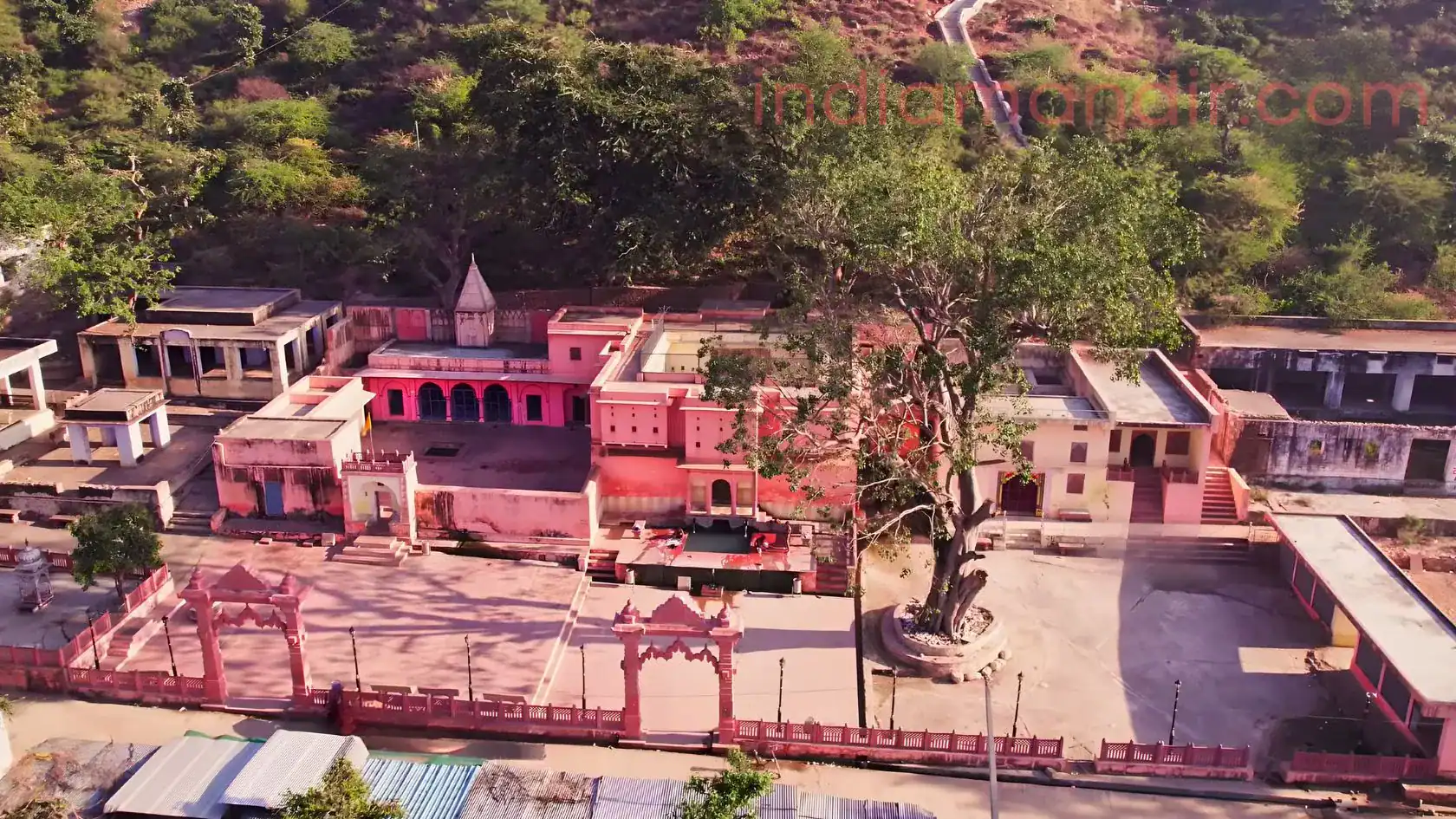
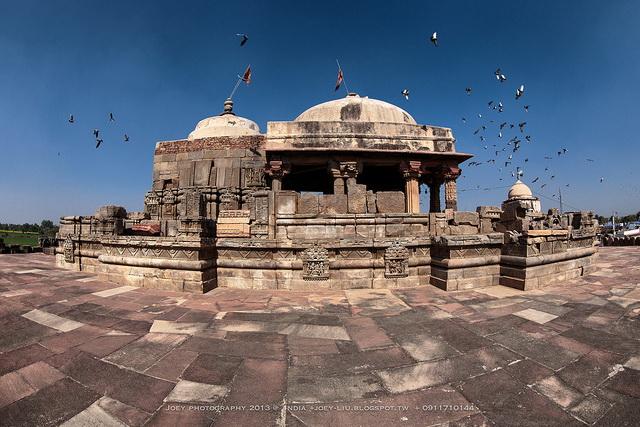
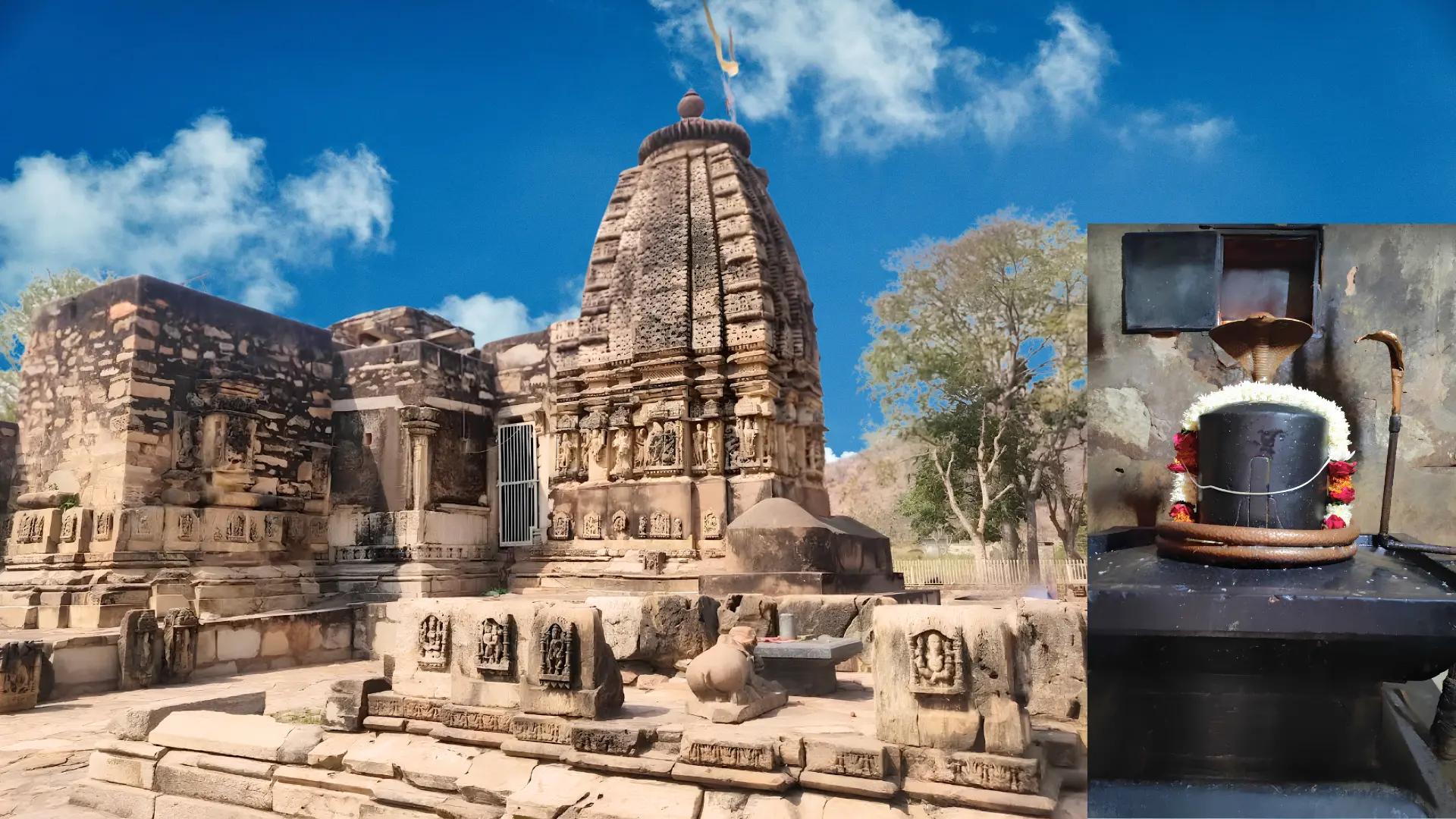
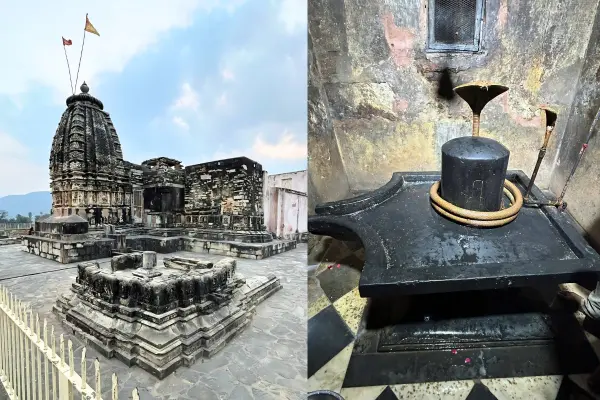
Neelkanth Mahadev Temple, Alwar (नीलकंठ महादेव मंदिर, अलवर) is situated deep inside the Sariska Tiger Reserve, perched on an isolated hillock near Tehla village — and honestly, this is one of those places where the journey and the destination are equally part of the story. This isn’t just another temple stop on a pilgrimage list. It’s a genuine archaeological monument, the last standing structure from what was once a sprawling temple complex on this plateau.
An inscription dated 961 CE tells us that Maharajadhiraja Mathanadeva, a local Pratihara ruler, built the temple — placing its origins at the very end of the 10th century. Long before it carried the name Neelkanth, this site went by Rajyapura, then later Paranagar, before the wider region eventually became known as Rajgarh.
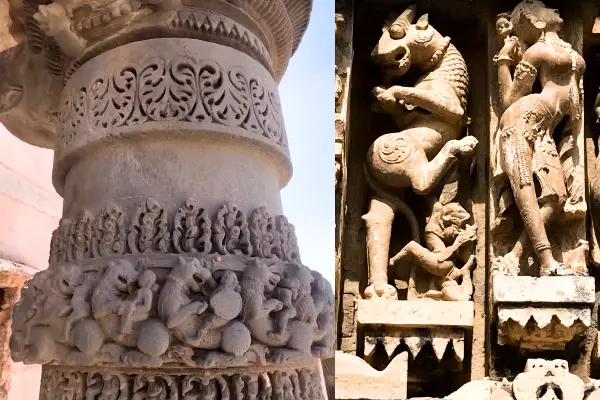
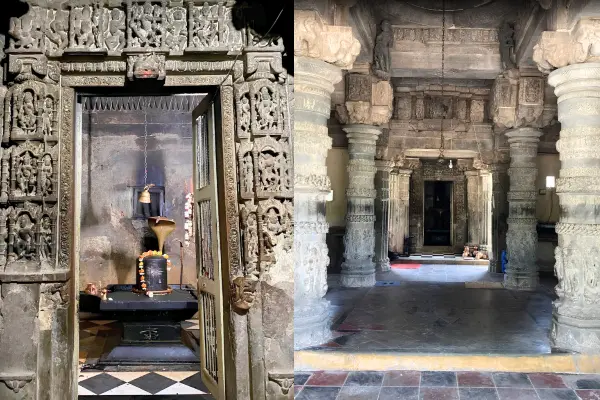
Locals also call it the “Khajuraho of Sariska,” a nod to its detailed carvings and pillared halls. Right beside the main Shiva shrine sits the Naugaja Temple, a Jain shrine dated even earlier, to 922–923 CE.
Getting here is half the experience. Since the temple sits inside an active tiger reserve, expect a slow, rough drive — but also the chance to spot langurs, peacocks, or deer along the way. There’s no entry fee, and the site is maintained by the Archaeological Survey of India.
Story behind Neelkanth Mahadev Temple Alwar
What the 961 CE Inscription of Neelkanth Mahadev Temple Tells Us
Most of what we know for certain about this temple comes from a single stone inscription dated 961 CE. According to the Archaeological Survey of India, which protects and maintains the site, this inscription names Maharajadhiraja Mathanadeva, a local feudatory of the Gurjara-Pratihara dynasty, as the builder. Based on this, the ASI places the temple at the very end of the 10th century. Some tourism sources stretch the construction window back to the 6th or even 7th century, but the ASI’s own dating, tied directly to the inscription, is the more reliable anchor point.
The Mathanadeva family later came to be known as the Badgujar clan, a name that still surfaces in local history around Alwar today.
There is a second inscription that some sources point to, dated around 1010 CE, crediting a ruler named Ajaypal of Rajorgarh with adding further carvings and sculptures to the site. This claim shows up in a few independent accounts, though it is not something the ASI’s own documentation explicitly confirms. We are noting it here as additional inscriptional evidence cited elsewhere, not as an established ASI fact.
Rajyapura to Paranagar: The Two Forgotten Names of Neelkanth Mahadev Temple
Before it was ever called Neelkanth, this place had two earlier names. The ASI records it as Rajyapura first, and later as Paranagar. Over time, the surrounding settlement came to be called Rajorgarh, which eventually shortened in everyday speech to Rajgarh, the name the tehsil carries today.
The Story Behind Naugaja Temple – Jain Temple
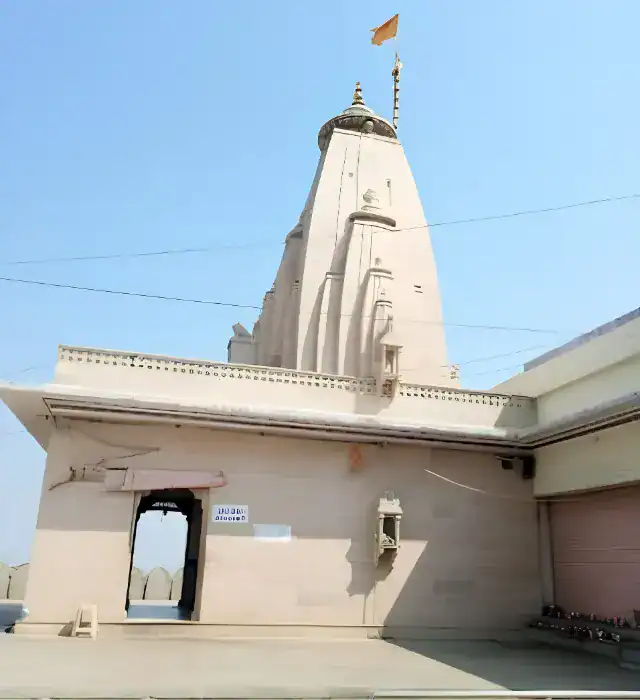
About a hundred metres from the main Shiva shrine stands the Naugaja Temple also known as Shri Naugaja Bhagawan Shantinath Digambar Jain Temple (श्री नौगजा भगवान शांतिनाथ दिगंबर जैन मंदिर) dedicated to the Jain Tirthankara Shantinatha (Google Location Link). Its inscription, preserved today in the National Museum, records that it was built on the thirteenth day of the dark half of Baisakha in Vikram Samvat 979, which corresponds to 922 to 923 CE. It was raised during the reign of Mahipala I Deva of the Gurjara-Pratihara dynasty of Kannauj, and the architect is named in the inscription as Sarvadeva of Simhapadra.
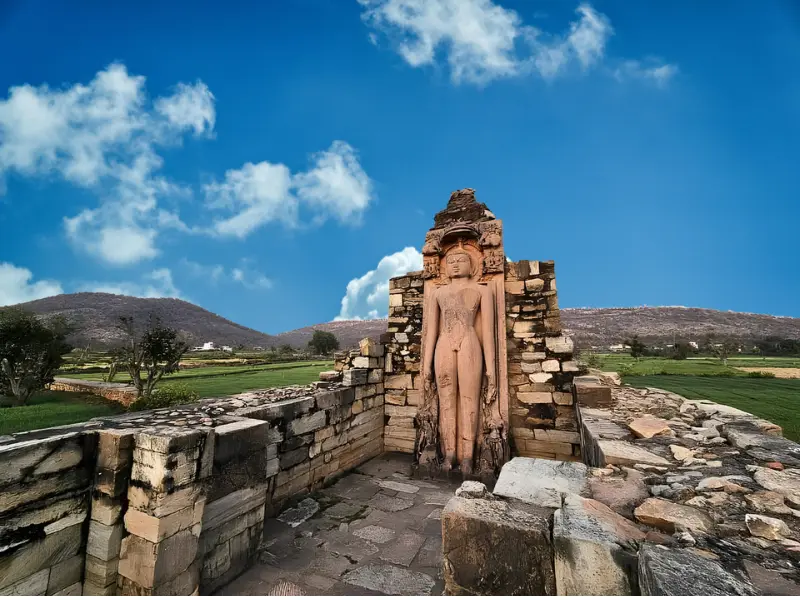
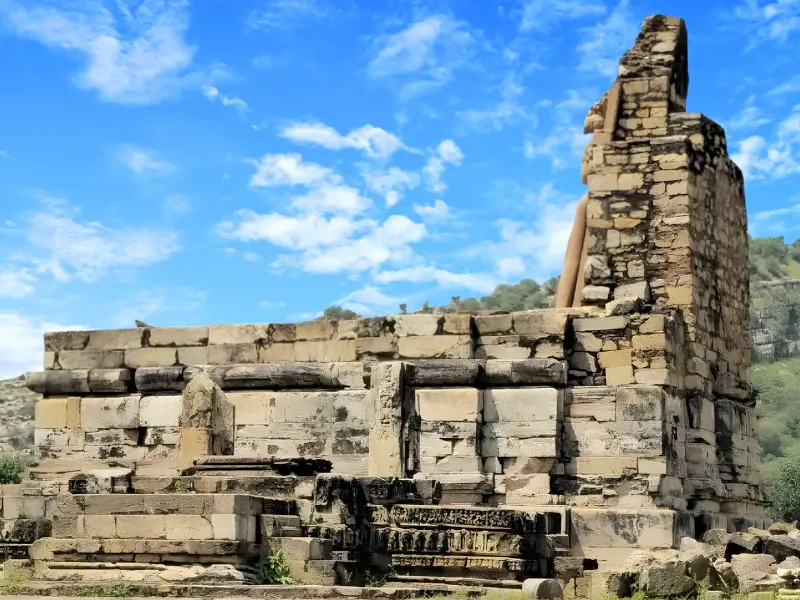
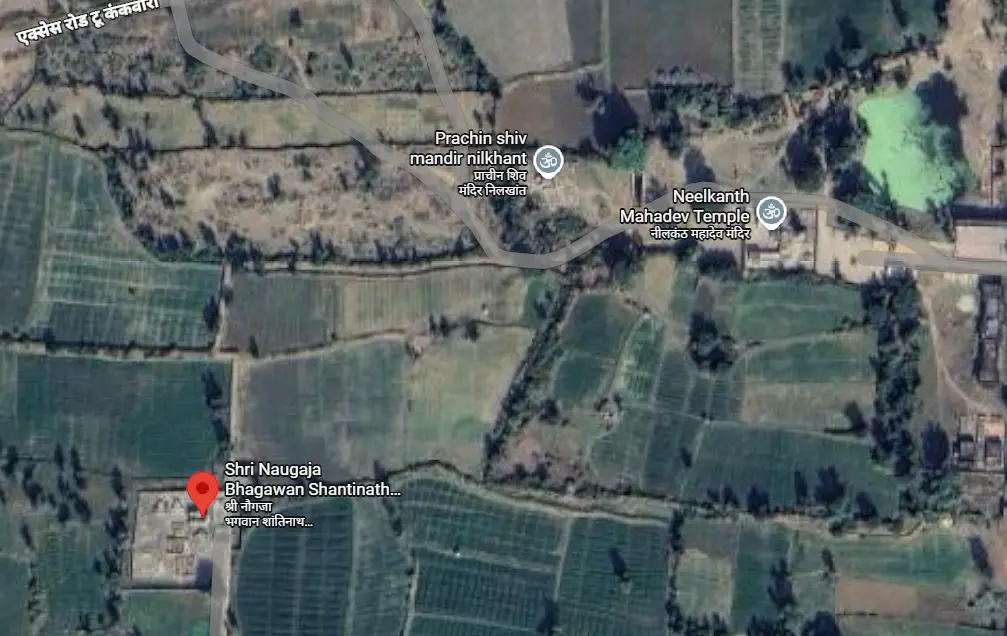
That makes the Naugaja Temple roughly four decades older than the inscription date of the Neelkanth temple itself. It is a detail almost nobody mentions, but it changes how you think about this site. The Jain shrine was not added later as an afterthought. It may well have been here first.
Lost Temple Town Around Neelkanth Mahadev
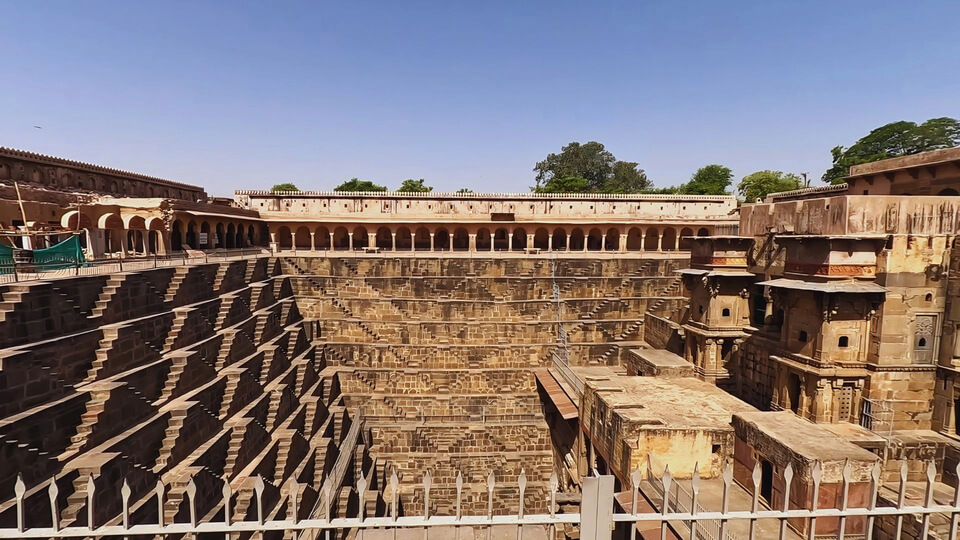
What stands today is one surviving shrine. What stood here originally was far larger. The ASI’s own records list several other ruined shrines scattered across the site, identified by names like Bataka-ki-Deori, Kotan-ki-Deori, Lachholava-ki-Deori, Dabar-ki-Deori, Hanuman-ki-Deori, and Bagh-ki-Deori. None of these survive in any complete form today, but their presence tells us this was once a genuine temple town, not a single isolated shrine on a hill.
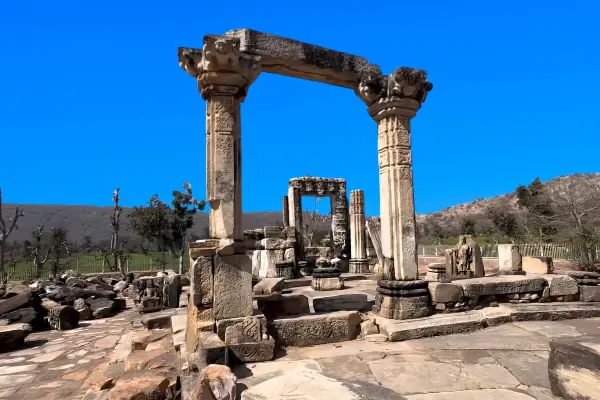
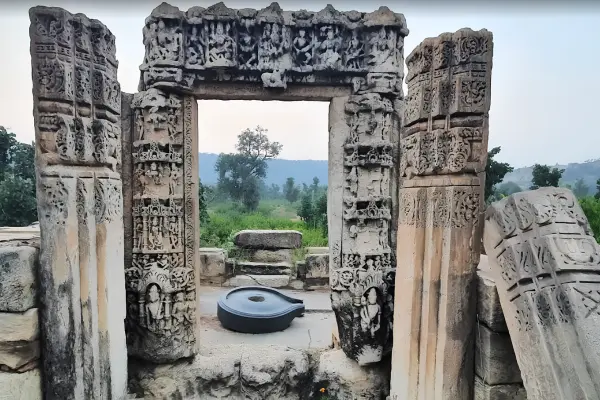
Different sources estimate the original number of temples here anywhere from around 200 to as many as 1000, depending on how loosely the term “temple” is used to describe scattered foundations and fragments. None of these higher figures are verifiable, so we are not stating a precise count. What can be said with confidence is that this was a large, fortified temple settlement, with stepwells, water tanks, and boundary walls, not a solitary structure.
Did Aurangzeb Attack Neelkanth Mahadev Temple? Separating History from Local Legend
The most commonly repeated story around this temple is that it was attacked and largely destroyed by the Mughal emperor Aurangzeb, and that the main Neelkanth shrine alone survived. This part of the story, that the wider complex was destroyed while one shrine remained standing, is widely repeated across local accounts and several published sources.
What is not settled is exactly why the main shrine survived. Some versions describe a sudden swarm of bees attacking the soldiers as they approached. Other versions describe a burst of fire or flame from the sanctum that forced the army to retreat. Both versions exist side by side in local telling, and there is no single documented account that confirms one over the other. We are presenting this as devotional legend, passed down through generations of visitors and priests, rather than as settled history.
It is also worth saying plainly that the direct link to Aurangzeb himself is based on local tradition and oral history, not on a specific Mughal-era record naming this site. The presence of Kankwari Fort nearby, where Aurangzeb is separately said to have imprisoned his brother Dara Shikoh, is sometimes used to support the connection, but that is circumstantial, not conclusive.
The Pandava Legend of Neelkanth Mahadev Temple
Local tradition also connects this site to the Mahabharata. The most common version holds that the Pandavas, during their exile, carried a Shivling all the way from Kashi and installed it here. A more detailed version of the story adds that the Pandavas had actually intended to install the Shivling at Bairath, known then as Viratnagar, the kingdom of King Virat where they spent part of their exile in disguise. Shiva is said to have agreed to accompany them on the condition that the linga be installed wherever they were standing at the break of day. Sunrise found them here instead of at Bairath, and so the linga was installed at this spot.
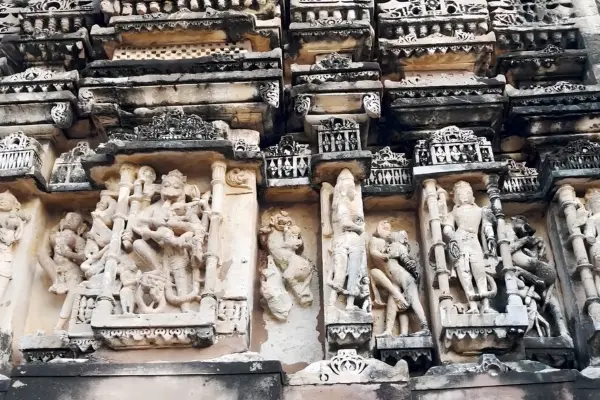
Viratnagar’s real proximity to this site gives the story a geographical anchor, and that is likely part of why the legend has persisted so strongly here. But it remains a matter of faith and oral tradition, not something archaeology has established. The ASI’s own dating, tied to the 961 CE inscription, points to construction roughly three thousand years after the period the Mahabharata is traditionally placed in. We mention both because both matter to anyone visiting. One is what history can show us. The other is what the temple means to the people who still come here to worship.
Neelkanth Mahadev Temple Alwar at a Glance
Temple at a Glance
Complete quick-reference information about Neelkanth Mahadev Temple, Alwar — for devotees, researchers, and travellers.
| Temple Identity | ||
| 🏷️ | Official Name | Neelkanth Mahadev Temple (Nilkantheshwar Temple) |
| 📝 | Also Known As | Neelkanth Temple Nilkanth Mahadev Khajuraho of Sariska |
| 📍 | Location | Tehla village, Rajgarh Tehsil, inside Sariska Tiger Reserve buffer area, Alwar District, Rajasthan |
| 🏛️ | Ancient Names | Rajyapura, later Paranagar (per ASI records) |
| Deity & History | ||
| 🙏 | Presiding Deity | Lord Shiva as Neelkanth, enshrined as a Shivling |
| 📜 | Inscription Date | 961 CE — ASI dates the temple to the late 10th century CE |
| 👑 | Built By | Maharajadhiraja Mathanadeva, a local Gurjara-Pratihara feudatory (Badgujar lineage) |
| 🏗️ | Architectural Style | Trikuta plan · Nagara shikhara · Pancharatha walls |
| 📖 | Religious Significance | ASI-protected Pratihara-era Shiva shrine; traditionally linked to the Pandavas’ exile and Lord Shiva’s Neelkanth form |
| 🛕 | Adjacent Shrine | Naugaja Temple (Jain, Tirthankara Shantinatha) — inscription dated 922–923 CE |
| Setting & Access | ||
| 🏞️ | Situated Inside | Sariska Tiger Reserve (Tehla Gate side) |
| 🚧 | Forest/Vehicle Entry | Approached via Tehla Gate route, distinct from Pandupol’s core-zone access rules (verify locally before travel) |
| 🛣️ | Road Condition | Rough, partly unpaved last stretch SUV or sturdy two-wheeler recommended |
| How to Reach — Distances | ||
| 🚗 | Nearest City | Alwar — distance reported variably across sources (approx. 25–72 km depending on route); see How to Reach section |
| 🚆 | Nearest Railway | Alwar Junction (AWR) |
| ✈️ | Nearest Airport | Jaipur International Airport — approx. 110 km |
| Visitor Information | ||
| 🕰️ | Visiting Hours | Reported variably, roughly 6:00 AM – 6:00 PM timings differ across sources — pending on-ground verification |
| 🙏 | Aarti Timings | Morning – 06:00 AM Evening – 06:00 PM |
| 🎫 | Entry Fee | No Entry Fee (per ASI record) |
| 📷 | Photography | Permitted across the complex, including the ruins and Naugaja Temple |
| 🌦️ | Best Time to Visit | October to March avoid heavy monsoon — road can become impassable |
| ⏱️ | Ideal Visit Duration | 45 minutes – 1.5 hours at the temple complex, plus forest travel time each way |
| ♿ | Accessibility | Moderate–Difficult rough approach road and uneven terrain; not ideal for limited mobility |
| 🐾 | Wildlife Caution | Located inside an active tiger reserve buffer zone; stay inside vehicles where instructed and avoid travel near dusk |
Darshan Timings at Neelkanth Mahadev Temple Alwar
Darshan Timings
Visit-planning information for Neelkanth Mahadev Temple, Alwar — including why published timings vary across sources.
| Session | Approx. Timing | Notes |
|---|---|---|
| Darshan Open Open | Approx. 6:00 AM | Different sources quote opening times anywhere between 6:00 AM and 10:00 AM |
| Darshan Close Closed | Approx. 5:00 PM – 6:00 PM | Closing time also varies by source; plan to leave before dusk regardless of exact closing hour |
| Peak Visiting Season | Shravan & Maha Shivaratri | Heaviest footfall during the monsoon month of Shravan and around Maha Shivaratri |
Neelkanth Mahadev Temple sits inside the Sariska Tiger Reserve area, approached from the Tehla Gate side. Unlike Pandupol, it is not governed by the same core-zone Tuesday/Saturday vehicle restriction, but its remote forest location means access and gate hours can still shift with season, road conditions, and forest department schedules. This is the most likely reason different websites quote different opening and closing times for this temple.
Rules for Visitors
Rules for Visitors — Neelkanth Mahadev Temple, Alwar
Neelkanth Mahadev Temple is both an active place of worship and a protected archaeological monument. These guidelines are based on the IndiaMandir team’s on-site observations and are intended to help you plan a safe, respectful, and comfortable visit.
- ⚑ This temple is a protected heritage site under the Archaeological Survey of India (ASI). Treat the ancient structures, carvings, and inscriptions with care.
- ✕ Do not climb on the ruins or lean against carved wall panels — the stonework is over a thousand years old and fragile in places.
- ✕ Do not touch, trace, or scratch any carved inscription or sculpture surface.
- ⚑ Follow any instructions or signage displayed by the ASI at the site.
- ⚑ The temple is located in Garh Village, Tehla Tehsil, Alwar district, within the Sariska region, on a hill amid a peaceful natural landscape.
- ✕ There is no direct public bus service to the temple. Travel by private car, taxi, or personal vehicle.
- ⚑ The approach road has uneven and dusty stretches — a car or sturdy two-wheeler is recommended for a comfortable journey.
- ✕ During the monsoon season, drive carefully — road conditions can deteriorate significantly on the last stretch.
- ⚑ 📍 Open in Google Maps
- ⚑ Remove footwear before entering the main sanctum area.
- ⚑ Dress modestly and respectfully — this is both a place of active worship and a heritage site.
- ✕ Do not litter anywhere in the complex. Carry your waste back with you — facilities are minimal.
- ⚑ Photography is generally permitted across the complex and ruins. Avoid flash photography near the sanctum, especially during active puja or aarti.
- ⚑ A priest is generally present at the temple, but this is primarily an archaeological site rather than a fully managed temple complex. Modern amenities are very limited.
- ✕ Avoid visiting after dark. The temple is in a remote forest location inside the Sariska Tiger Reserve area, with limited lighting and no facilities after sunset.
- ⚑ Plan your visit during daylight hours only and leave well before dusk, regardless of exact closing hours.
- ⚑ The surrounding forest is active tiger reserve territory. Stay on marked paths, stay inside your vehicle where instructed, and do not wander into the tree line.
- ⚑ Mobile network connectivity is very limited or absent at and near the temple. Download offline maps before you leave.
- ⚑ For a quick darshan only, allow at least 45 minutes at the temple itself, plus travel time each way.
- ⚑ If you are interested in history, heritage, or ancient temple architecture, set aside 2 to 3 hours to explore the complex at a relaxed pace — the ruins, the Naugaja Jain Temple, the stepwell, and the scattered sculpture fragments all deserve unhurried attention.
Neelkanth Mahadev Temple is best experienced during the early morning or late afternoon, when the light falls across the carved stone walls and the Aravalli hills around Sariska are at their most beautiful. The drive through the forest, the silence of the plateau, and the age of what stands before you are all part of what makes this place worth the effort.
Come prepared, come early, and give yourself enough time. This is not a temple you want to rush.
Best Time to Visit Neelkanth Mahadev Temple Alwar including Festivals Time
Best Time to Visit Neelkanth Mahadev Temple, Alwar
The temple is accessible throughout the year — there are no seasonal closures here. But October to March offers the most comfortable conditions for exploring the ruins and the surrounding Aravalli landscape, while July to September brings the Sariska hills alive in a way that is genuinely worth experiencing if you can handle the road.
Cool, dry, and comfortable. The Aravalli forest turns lush after the monsoon and stays green well into November. Perfect for exploring the ruins and carved panels at a relaxed pace. Wildlife sightings on the forest road to Tehla are also at their best in these months. Maha Shivaratri (February–March) brings the largest gathering of devotees of the year.
This is when the hills around Sariska look their most extraordinary. Clouds sit low over the Aravallis, the plateau turns a deep green, and the forest road to Tehla feels like a different world entirely. The Shravan month falls in this window — the most sacred period for Shiva worship — so the temple sees a steady stream of devotees even in the rains. Check road conditions before you leave — the last stretch to the temple can become muddy and slippery after heavy rain.
Temperatures in the Alwar–Sariska belt regularly exceed 42°C to 45°C in peak summer. The drive through the forest is exposed, and the temple complex itself offers very little shade. If you do visit in these months, leave well before 9 AM and carry plenty of water. Tiger sightings on forest roads are actually higher in summer as animals gather near water sources, so wildlife enthusiasts sometimes visit specifically for this reason.
| Festival | When | What to Expect |
|---|---|---|
|
Maha Shivaratri
|
February – March Falgun Krishna Chaturdashi |
Largest gathering of the year. Devotees travel from across Alwar district for special darshan and overnight vigil. Arrive early. |
|
Shravan Maas
|
July – August Monsoon month of Shravan |
Most sacred month for Shiva worship. Steady stream of devotees every Monday. Temple is actively worshipped through the entire month. |
|
Bhadramas Somvar
|
August – September Mondays in Bhadrapada month |
Devotion continues from Shravan into Bhadrapada. Monday visits by local devotees remain common through this period. |