
Important Temples near Mehandipur Balaji Temple Dausa
This post is part of Mehandipur Balaji Temple — Complete Guide to Darshan, Rituals & History | IndiaMandir
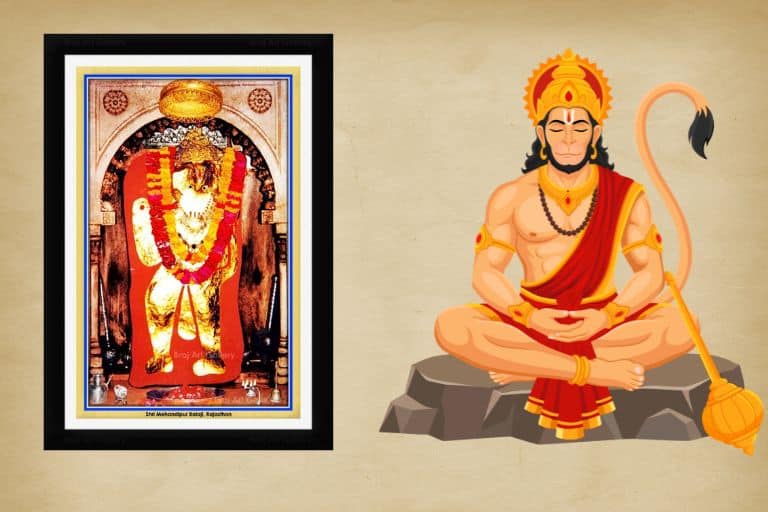
Featured Temple · Dausa
Mehandipur
Balaji Temple
One of North India’s most powerful Hanuman temples — known for healing rituals, unwavering faith, and centuries of devotion.
Visit & Explore Full GuideThe main Balaji temple is the heart — but Mehandipur is an entire sacred geography. Once you have completed the main darshan, these temples and sites are part of the complete pilgrimage experience.
Beyond the Main Shrine
Nearby Temples
at Mehandipur Balaji Temple
The Mehandipur Balaji Temple complex extends far beyond the main Balaji sanctum — from a hilltop shakti cluster to a 151-feet statue, each site carries its own significance and ritual purpose.
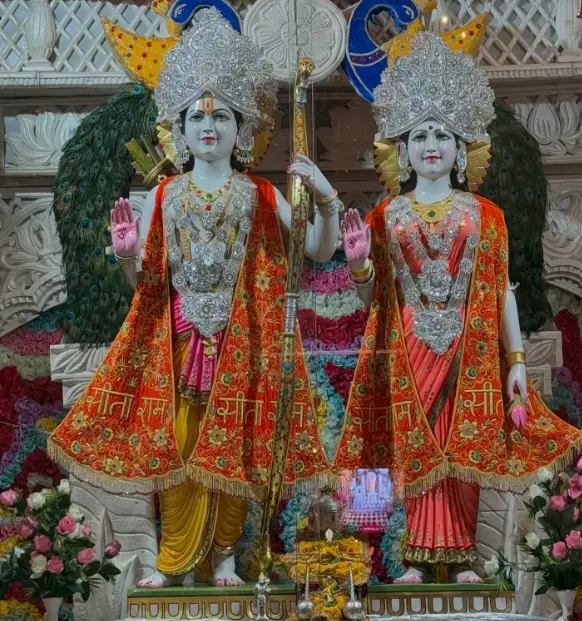
Temple No. 01
Ram Darbar Temple
Directly Opposite the Main Balaji Entrance
A magnificent white marble temple just across from the main Balaji entrance. Sita Ram Ji preside at center, with Radha Krishna Ji to the left. The quality of marble craftsmanship and idol sculpture here is genuinely beautiful — many devotees find this a space of profound calm within the complex’s intense energy.
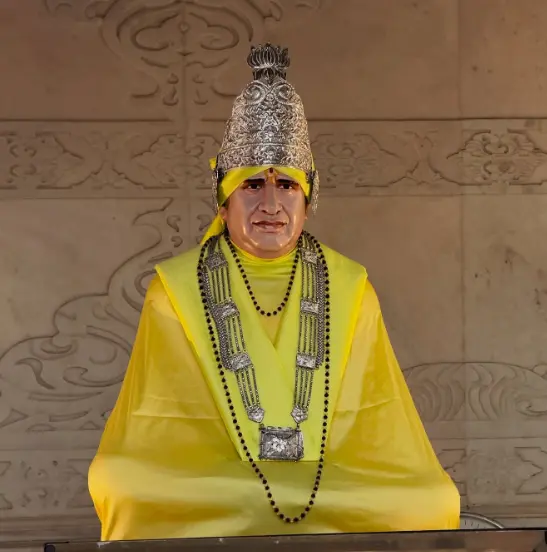
Samadhi wale Baba
Behind Ram Darbar · Sacred Tomb
The samadhi sthal of Shri Ganesh Puri Maharaj — the founding mahant of Mehandipur. Long queues of devotees come to bow at the first servant of Balaji. New construction and circular garden development is currently underway around the complex.
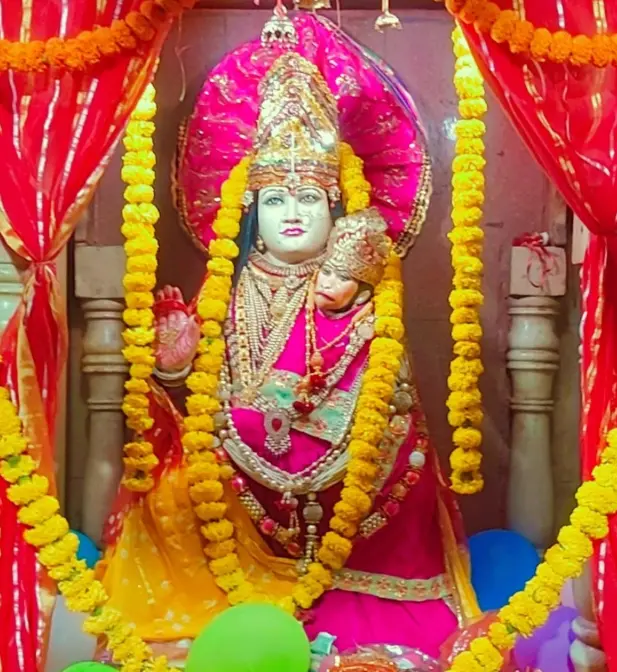
Anjani Mata Muktidham
1 km from Main Temple · On Main Road
A beautifully designed newer complex featuring a Himalaya mountain recreation, an Ashok Vatika recreating the Ramayana garden, and Mata Anjani’s shrine. Adds a full Ramayana-narrative dimension to the Mehandipur visit.
Landmark No. 04
151-Feet
Hanuman Ji Statue
Most Photographed Landmark
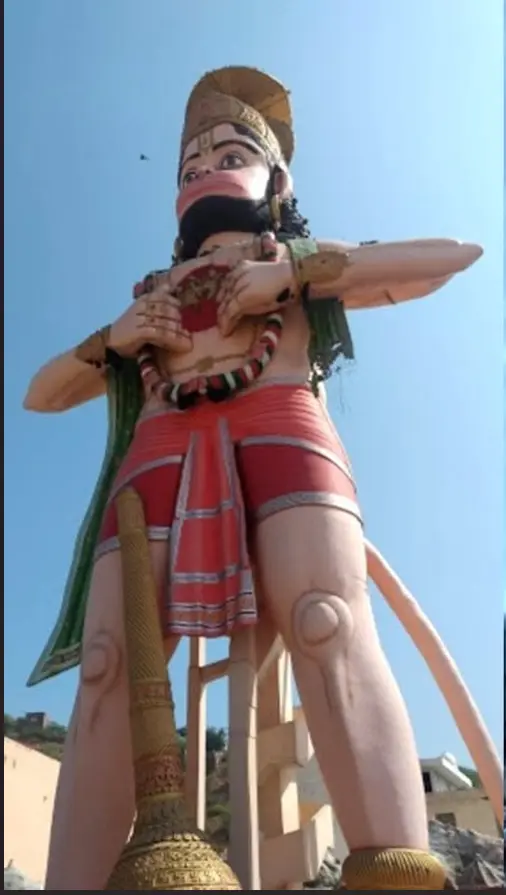
Visible from virtually everywhere in Mehandipur, this is one of the largest Hanuman idols in Rajasthan. At its base, a Rakshas-mukhi cave depicts stories from Hanuman Ji’s life in illustrated scenes. The combination of the colossal statue, surrounding hillscape, and valley backdrop makes this the most photogenic spot in the complex.
 Hilltop Cluster
Temple No. 03 · 1 km Climb · ~25 min walk
Teen Pahadi — Three Hilltop Temples
First right lane from Main Balaji · Three Sacred Shrines
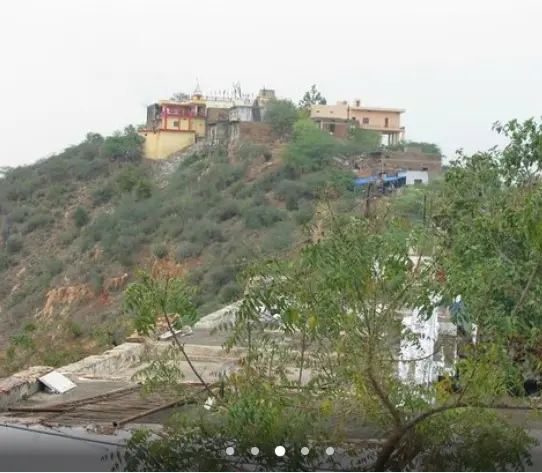
Take the first right-side lane from the main temple. A 1 km climb through narrow lanes and small shops brings you here — three important temples on the hillside, each with a specific ritual purpose. The view from the top offers a complete aerial look at the entire Mehandipur valley.
- Maa Kaali — Nazar removal: a lemon is placed on the devotee’s head and cut in the traditional evil-eye remedy ritual
- Mata Anjani — Specifically for santaan praapti (blessing of children); Hanuman Ji’s mother
- Panchmukhi Hanuman Ji — Bandhan nivaran (removal of negative binding); one of three major healing rituals at Mehandipur
 Adventurer’s Trail
Temple No. 05 · Demanding Trek · Monsoon Best
Saat Pahadi — Seven Hilltop Temples
Behind Main Temple · Rocky Path · No Steps
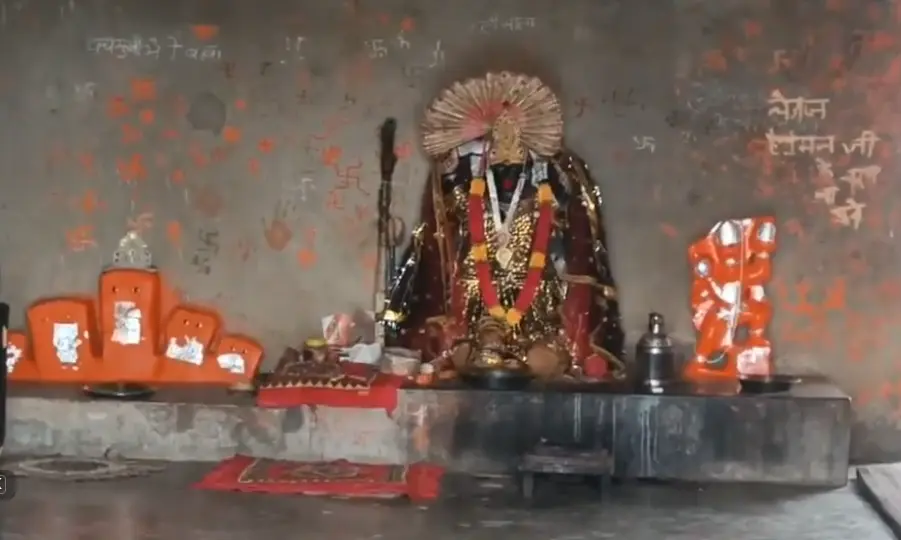
Far more demanding than Teen Pahadi — no steps, only a rough rocky path requiring genuine effort. Best visited in the monsoon when surrounding greenery makes the climb worthwhile. Seven temples distributed across the hillside; the final one is the most significant.
- Sheshnag Temple
- Anjani Mata
- Balaji Temple
- Kaali Mata
- Chamunda Mata
- Gorakhnath Ji
- Ancient Mahadev Temple — a massive natural rock formation associated with Balaji stands beside this Shiva shrine at the peak
Ram Darbar Temple — Directly Opposite Balaji
Just across from the main Balaji temple entrance is the **Ram Darbar** — a magnificent white marble temple with exceptional craftsmanship. Sita Ram Ji preside at center, with Radha Krishna Ji to the left. The quality of the marble work and the idol sculpture here is genuinely beautiful. Many devotees find this temple a space of profound calm within the larger complex’s intense energy.
Samadhi wale Baba, Mehandipur Balaji Temple
Who is Samadhi Wale Baba?
Tucked within the sacred grounds of Mehandipur Balaji — the famous temple town of Rajasthan — is a temple that every devout visitor considers essential before leaving. This is the temple of Samadhi Wale Baba, whose real name was Sri Ganesh Puri Ji Maharaj. Behind the Ram Darbar is the samadhi sthal (sacred tomb) of **Shri Ganesh Puri Maharaj** — the founding mahant of Mehandipur, also lovingly called **Samadhi wale Baba**. Long queues of devotees come here to bow their heads at the first servant of Balaji.
Baba Ganesh Puri Ji holds a very special place in the history of Mehandipur Balaji — he was the very first Mahant, the head priest and spiritual custodian of the Balaji mandir. It is largely through his devoted efforts that the miracles and glory of Sri Balaji were carried from the temple to the hearts of ordinary people. Many believe that Mehandipur Balaji’s fame spread so widely because of his tireless service and unshakeable faith.
They say that a visit to Mehandipur Balaji remains incomplete without stopping at Samadhi Wale Baba’s shrine. The Baba’s blessing is considered the first and final seal on any yatra here.”— As told by generations of visiting bhakts
**Offering:** Deepak (lamp) and Jalebi.
Blessing available here: Small containers of **Balaji ka Jal** — sacred water — are available. This is the water for family members and those who could not make the journey themselves.
*New construction of the Samadhi sthal is currently underway, with circular garden development around the complex.*
How to Offer the Bhog — Step by Step
- Wash your hands — Take a small portion of jalebi in clean hands after washing them thoroughly.
- Seven rotations over your head — With full devotion, rotate the jalebi around your head seven times (saat baar). This is the heart of the ritual.
- Place with love — Traditionally, the jalebi is tossed behind you, but due to temple crowds, it is now placed respectfully at the spot where other devotees have offered theirs.
- Do not eat the prasad yourself — After offering, the prasad should not be consumed by you, nor shared with anyone else.
- Seven parikramas — Perform seven circumambulations of Baba’s samadhi, chanting “Samadhi Wale Baba Ki Jai” throughout. Many devotees complete this by lying flat on the ground — known as dandvat parikrama.
Best Time to Visit
Friday is considered the most auspicious day to offer bhog at Samadhi Wale Baba’s shrine. Arrive before 12:30 PM to ensure you can complete the bhog and parikrama peacefully.
After the Darshan
Once your rituals at Samadhi Wale Baba’s shrine are complete, find a quiet spot nearby, sit down, and spend a few minutes in silent meditation on Baba. Devotees say the peace that follows is unmistakable. You can then proceed to Teen Pahadi — the three-hillock sacred area — to complete your Mehandipur Balaji yatra.
3. Teen Pahadi Shakti Sthal — Three Sacred Hilltop Temples
From the main Balaji temple, take the first right-side lane. A **1 km climb** (approximately 20–30 minutes of walking) through narrow lanes and small shops brings you to **Teen Pahadi** — a group of three important temples on the hillside above Mehandipur.
**Temple 1 — Maa Kaali:** The first and most visited. Here, a specific ritual is performed: a lemon is placed on the devotee’s head and cut — this is the traditional method of removing *nazar* (evil eye) at this shrine. Many families who come to Mehandipur specifically include this stop.
**Temple 2 — Mata Anjani:** A short distance further. Devotees who come seeking *santaan praapti* (blessing of children) offer their prayers specifically here, at the temple of Hanuman Ji’s mother.
**Temple 3 — Panchmukhi Hanuman Ji:** The third and highest temple. Here, *bandhan nivaran* (removal of negative binding) is performed. This is one of the three major healing rituals at Mehandipur alongside the main temple’s Arzi process.
**The view from Teen Pahadi:** Standing at the top, you get a complete aerial view of the entire Mehandipur valley — the main temple below, the surrounding hills, the thousands of devotees moving through the lanes. It is genuinely stunning, and one of the under-visited experiences of Mehandipur.
4. 151-Feet Hanuman Ji Statue
Visible from virtually everywhere in Mehandipur, the **151-feet tall statue of Hanuman Ji** is one of the largest Hanuman idols in Rajasthan. At its base is a **Rakshas-mukhi (demon-face shaped) cave** that depicts stories from Hanuman Ji’s life with illustrated scenes inside. This cave walk is one of the most interesting heritage elements of the Mehandipur complex.
This location is also the most popular spot in Mehandipur for photographs — the combination of the colossal statue, the surrounding hillscape, and the valley backdrop makes it genuinely photogenic.
5. Saat Pahadi — Seven Hilltop Temples (For the Adventurous)
Further behind the main temple lies **Saat Pahadi** — a much more demanding climb than Teen Pahadi. There are no steps here — only a rough, rocky path that requires genuine physical effort. It is best visited during the monsoon when the surrounding greenery makes the effort worthwhile.
At the top, **seven temples** are distributed across the hillside:
1. Sheshnag Temple
2. Anjani Mata
3. Balaji
4. Kaali Mata
5. Chamunda Mata
6. Gorakhnath Ji
7. **Ancient Mahadev Temple** — the final and most significant, where a massive natural rock formation associated with Balaji stands beside the Shiva shrine
The Saat Pahadi is an off-beat, adventurous dimension of the Mehandipur pilgrimage — not for everyone, but for those who make the effort, completely unique.
6. Anjani Mata Muktidham — 1 km from Main Temple on Main Road
**Muktidham** (also called Anjani Devi Mandir) is located approximately 1 km from the main Balaji temple, directly on the main road. Within this newer complex:
– **Himalaya mountain recreation** — a visual representation of the Himalayan setting
– **Ashok Vatika** — recreating the garden from the Ramayana
– **Mata Anjani’s temple** — worshipping Hanuman Ji’s mother
This is a beautifully designed space that adds a Ramayana-narrative dimension to the Mehandipur complex, making it particularly meaningful for those who wish to understand Hanuman Ji’s complete story.