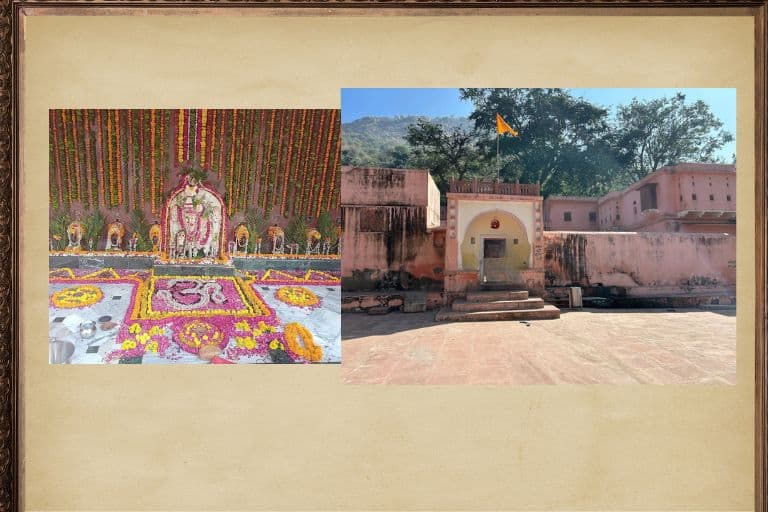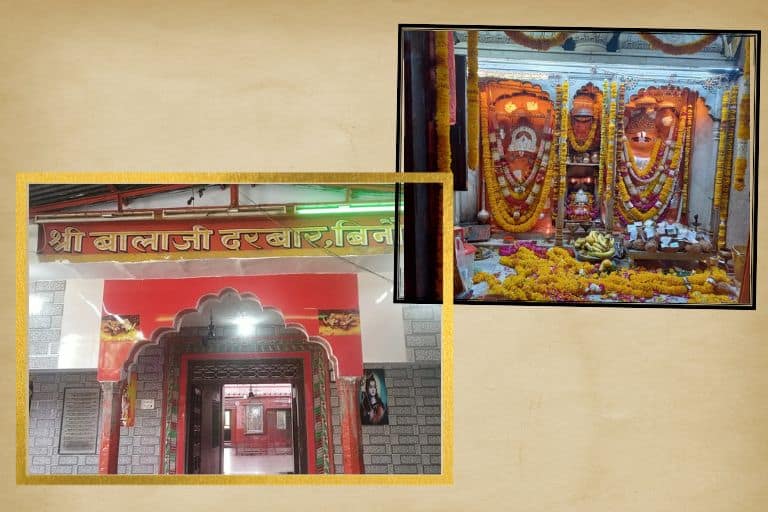
Mehandipur Balaji Temple — Complete Guide to Darshan, Rituals & History | IndiaMandir

*Jai Bajrang Bali 🙏*
Also: Sita Ram Ji and Bholenath within main sanctum
Most auspicious — also most crowded
Significance of Mehandipur Balaji Temple?
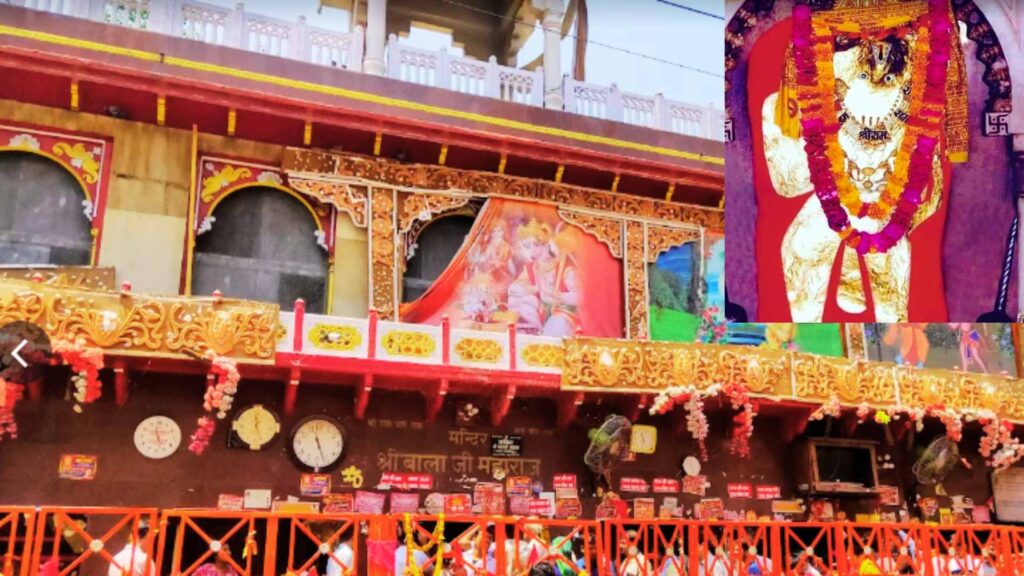
Mehandipur Balaji Temple, located in Dausa district of Rajasthan at the Dausa–Karauli border, is one of the most powerful and unusual Hindu temples in all of India. Dedicated to Lord Hanuman in his Balaji (childhood) form, this temple is known across the country — and increasingly around the world — for its unique rituals, its intense spiritual energy, and its reputation for healing those who come with genuine suffering and complete faith.
You may visit Complete Guide of Temples in Dausa District here
This is not just a pilgrimage site. For millions of devotees, it is a place where the impossible became possible. Many devotees believe this temple helps remove negative energy, fear, and unexplained problems through faith and rituals.
Come. Let us take you through everything — the history, the three deities, the rituals, the exact timings, the rules, the nearby temples, stay options, and what to actually expect when you arrive.
History of Mehandipur Balaji Temple — How It All Began
The Aravalli hills of eastern Rajasthan have been considered spiritually charged for centuries. This was once a dense forest — wild, untouched, and far from human settlement. The area where the temple now stands sits between two small hills, and this is why it is also called **Ghata Mehandipur** — the valley of Mehandipur. It was here, according to belief, that the idol of Lord Hanuman first appeared, not carved by any human hand, but self-manifested (swayambhu) from the stone of the hill itself.
The Divine Vision of Ganesh Puri Maharaj
The story of how the temple was established has been passed through generations of the mahant family who have served here. The ancestor of the current mahants — **Shri Ganesh Puri Maharaj Ji** — received a divine vision approximately a thousand years ago. In that dream, Balaji appeared and commanded him to establish a temple here and dedicate himself to the service of suffering devotees.
It was not just a vision. When Ganesh Puri Maharaj opened his eyes, the presence was before him. Three forms — Balaji, Bhairav Baba, and Pretraj Sarkar — all self-manifested (swayambhu). The command was clear: *”Be ready to serve your duty.”*
From that night forward, worship began at this spot in the forest. The forest gave way to a settlement. The settlement grew into a village. And the simple place of worship grew into the grand temple complex that stands today — nestled between two Aravalli hills, with the idol of Balaji at its center. The mahant lineage of Ganesh Puri continues to this day.
Is Mehandipur Balaji Temple is 1000 years Old?
The Mehandipur Balaji temple is approximately **1,000 years old**, firmly established by the 11th century CE. The three deities — Balaji, Bhairav Ji, and Pretraj Sarkar — are all swayambhu. No sculptor created them. They emerged from the stone of the Aravalli hill itself.
The temple trust today manages not only the spiritual affairs of this enormous pilgrimage site but also runs social welfare programs in education, healthcare, and support for women and children — continuing the seva tradition that Ganesh Puri Maharaj established at the very beginning.
A new construction of the main temple and the Samadhi sthal is currently underway, which will bring modern amenities while preserving the sanctity of the ancient space.
THE THREE DEITIES
What makes mehandipur balaji temple truly unique is not just Lord Hanuman alone, but a divine triad of three powerful deities, each playing a specific role in spiritual healing and protection.
Together, they form a complete divine justice system — where protection, action, and resolution happen in sequence.
🙏 Shri Balaji Maharaj — The King of Mehandipur
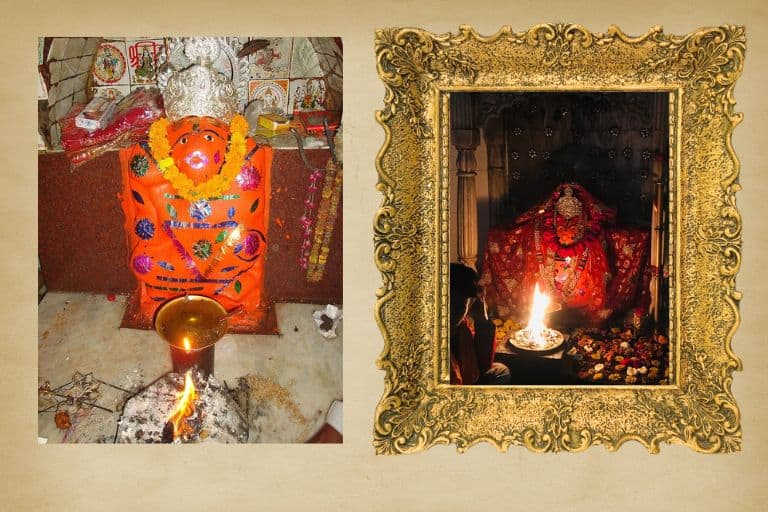
Shri Balaji (Lord Hanuman in childhood form) is the main deity of mehandipur balaji temple and is worshipped as the supreme protector and ruler of this sacred place.
- Considered an avatar of Lord Shiva
- Known as Sankat Mochan (remover of suffering)
- Idol is swayambhu (self-manifested) from Aravalli hills
Inside the sanctum:
- Sita Ram Ji on the left
- Lord Shiva (Bholenath) on the right
👉 A rare divine combination in one place.
Unique Miracle – Balaji ka Pasina
A small hole in Balaji’s chest releases sacred water continuously, known as Balaji ka Pasina. This water is sprinkled on devotees during morning darshan and is considered highly auspicious.
Kotwal Bhairav Ji — The Divine Protector
Kotwal Bhairav Ji is the guardian and commander in the spiritual system of the temple.
- Acts as the enforcer of divine justice
- Removes negative energies immediately
- Worshipped right after Balaji darshan
👉 If Balaji is the King, Bhairav Ji is the protector of the kingdom.
Offerings:
Urad dal sweets, Dahi Bhalle, and Gulgule
Pretraj Sarkar — The Judge of Spirits
Pretraj Sarkar is the most unique aspect of mehandipur balaji temple, known as the judge of spirits and negative forces.
- Presides over the divine court of justice
- Handles cases of spiritual disturbances
- Devotees submit prayers (Arzi) here
After Bhairav Ji, devotees climb steps to reach this sacred court.
👉 His role is to punish and remove negative energies affecting devotees.
Offerings:
Kheer or cooked rice
The three deities together create a complete system:
- Balaji → Protection
- Bhairav Ji → Action
- Pretraj Sarkar → Justice
This is why mehandipur balaji temple is considered one of the most powerful Hanuman temples in India.
Temple Architecture — The Valley Temple
Standing between two Aravalli hills — which is why it is called Ghata (valley) Mehandipur — the temple is an architectural ensemble in the Rajput tradition, with small pillared balconies, intricate stone detailing, and a multi-chambered layout built and expanded over centuries by successive mahants of the Ganesh Puri lineage.
Temple Structure — Four Main Chambers
The main mehandipur balaji temple is designed in a sequential layout of four chambers, each with a specific spiritual purpose.
Chambers 1 & 2 — Balaji Maharaj & Bhairav Ji
- Shri Balaji (center)
- Sita Ram Ji (left)
- Lord Shiva (right)
- Kotwal Bhairav Ji (next chamber)
👉 The idol of Balaji is swayambhu (self-manifested) from the Aravalli hills.
During morning aarti, devotees may receive Balaji ka Pasina — sacred water considered highly powerful and blessed.
Chambers 3 & 4 — Pretraj Sarkar Darbar
Located slightly above (via steps), these chambers include:
- Pretraj Sarkar (divine court)
- His Diwan (assistant)
👉 This is where the most intense rituals of mehandipur balaji temple take place. Devotees are advised to stay calm and focused during darshan.
Ram Darbar Temple (Opposite Main Temple)
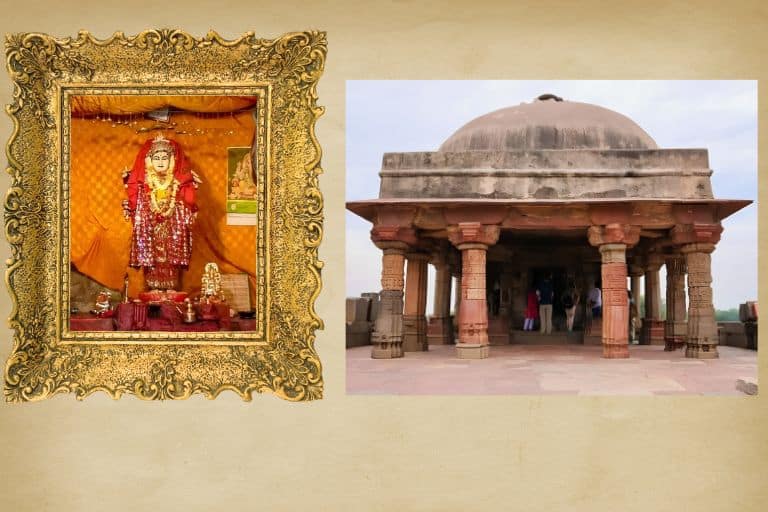
Just opposite the main mehandipur balaji temple, the Ram Darbar Temple offers a completely different, peaceful experience.
- Beautiful white marble architecture
- Sita Ram Ji at center
- Radha Krishna Ji also present
👉 Many visitors feel deep calm here after the intense energy of the main temple.
Samadhi wale Baba (Ganesh Puri Maharaj)
Behind Ram Darbar lies the sacred samadhi of Ganesh Puri Maharaj, the founder of the temple.
- Also known as Samadhi wale Baba
- Devotees offer deepak and jalebi
- Sacred Balaji ka Jal is available here
👉 This water is taken home as a blessing for family members.
The surrounding area has grown over decades — shops, dharamshalas, and establishments line every approach lane. But the two hills on either side of the temple remain, creating the distinctive valley setting that gives Mehandipur its character.
Mehandipur Balaji Temple – DARSHAN TIMINGS & AARTI SCHEDULE
Section 6 — Temple Guide
Mehandipur Balaji Temple
Darshan Timings & Aarti Schedule
| Aarti | Time | Important Note |
|---|---|---|
| Morning Aarti Mangla Aarti |
6:00 AM – 6:40 AM | NO entry inside during aarti — all devotees watch from outside |
| Evening Aarti Sandhya Aarti |
6:30 PM – 7:10 PM | NO entry inside during aarti — all devotees watch from outside |
| Session | Timing | Notes |
|---|---|---|
| Morning Darshan | 7:00 AM – 11:00 AM | Doors open after morning aarti |
| Rajbhog Break Closed | 11:30 AM – 12:00 PM | Temple closed for Rajbhog (Lord’s meal time) |
| Afternoon Darshan | 12:00 PM – 6:30 PM | Open continuously |
| Evening Darshan Post Aarti |
7:10 PM – 9:00 PM | After evening aarti ends |
min
hrs
hrs
Rituals at Mehandipur Balaji — A Complete Step-by-Step Guide
🔱 Rituals at Mehandipur Balaji Temple (Step-by-Step Guide)
The rituals at Mehandipur Balaji Temple are unique and different from most temples. Understanding them properly helps you complete your darshan peacefully.
🪔 Step 1 — Buy Prasad Before Entry
- Shri Balaji: Laddoos (₹51+)
- Kotwal Bhairav Ji: Urad dal sweets, Dahi Bhalle
- Pretraj Sarkar: Kheer or rice
🛕 Step 2 — Darshan Sequence
- 1. Shri Balaji: Offer laddoo & make wish
- 2. Bhairav Ji: Offer prasad
- 3. Pretraj Sarkar: Offer kheer/rice
- 4. Diwan: Final darshan before exit
🍬 Step 3 — Prasad Rules
- ✔ Normal laddoo prasad can be taken home
- ❌ Arzi prasad cannot be taken home
🔸 Step 4 — Durkhasta
- Offer prasad to all three deities
- Give 2 laddoos to affected person
- Remaining → feed animals
🔥 Step 5 — Arzi Ritual
- Rogi sits outside temple
- ₹151 prasad offered inside
- 2 laddoos given to rogi
- Remaining → animals only
🍛 Step 6 — Sawamani
Offering made after wish fulfillment (approx. 51 kg prasad).
| Option | Details |
|---|---|
| Temple Trust | Chhappan Bhog, Rajbhog |
| Shops | ₹100 – ₹2100 |
| Home | Self-made prasad |
Note: If booking through the official temple trust: You receive **VIP entry for 3 members** for darshan. Prasad collection from the distribution hall with receipt. Prasad timing: **12:00 PM to 2:00 PM daily**.
**Sawamani can be booked online** through the official website mehandipurbalaji.com for those who cannot visit in person. Sawamani is most auspiciously performed on **Tuesdays or Saturdays**.
How to Plan Your Yatra
Local wisdom from experienced visitors: **the ideal Mehandipur visit is overnight**. Arrive the evening before, check into a dharamshala, and attend the evening aarti. Wake early and attend the morning aarti. Spend the day exploring the full complex. Attend the evening aarti again before departing. Both aartis together make the yatra complete. Attending only one is considered incomplete by local tradition.
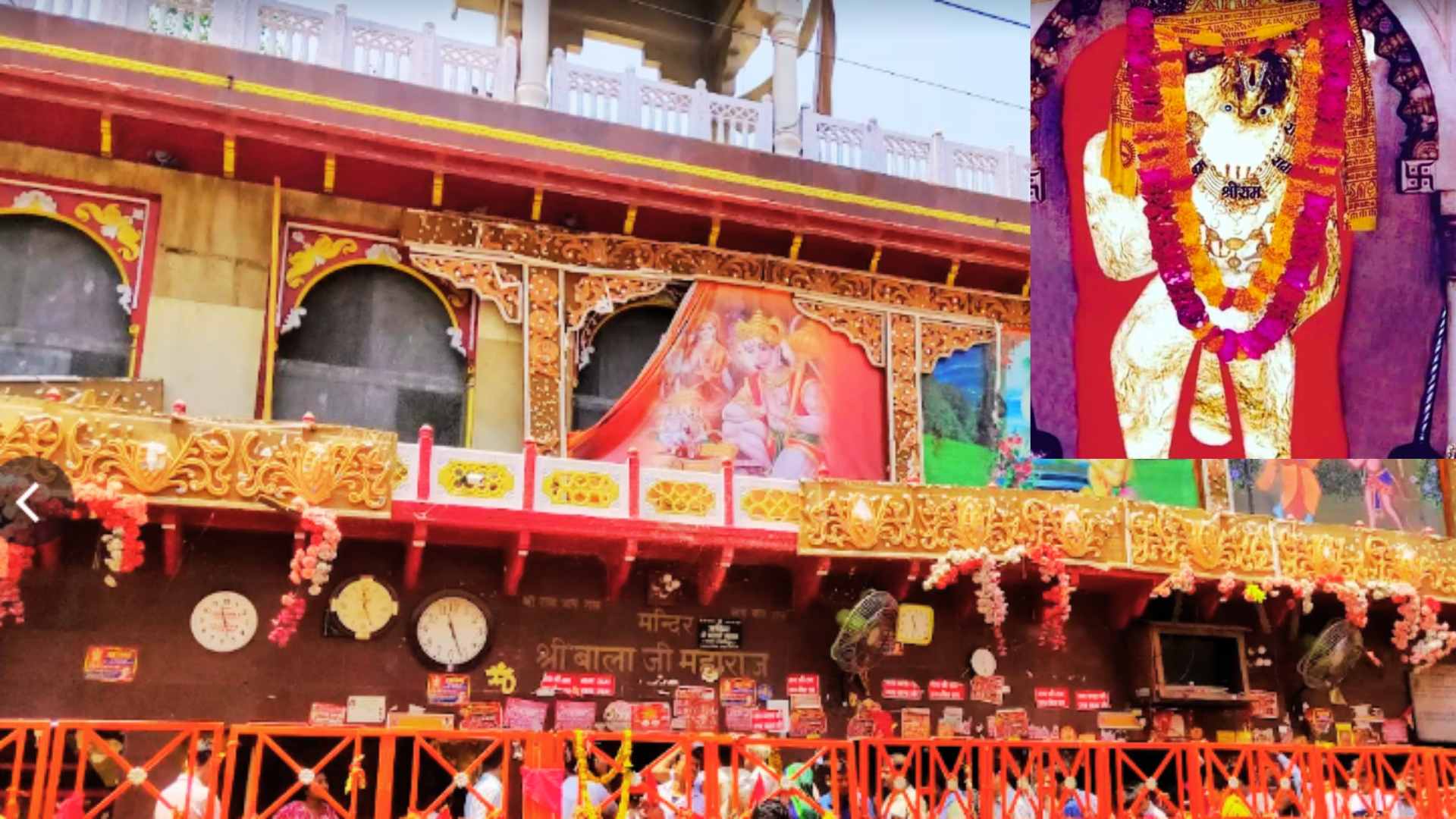
How to Reach Mehandipur Balaji
Complete guide for reaching Mehandipur Balaji Temple including nearest railway station, airport, road routes, where to stay, hotel budget, Dharamshala options, food and travel tips.
Section 7 — Visitor’s Guide
Rules at Mehandipur Balaji
What Every Visitor Must Know
These rules are not arbitrary — they are rooted in the spiritual nature of this place, maintained for centuries. Follow them sincerely, and come with an open heart.
Before You Leave Home
- Avoid tamasic food for at least one week before visiting — no meat, egg, alcohol, onion, or garlic.
- Continue avoiding these for at least one month after returning, if possible.
Dress & Conduct
- Do not wear black clothes inside the temple premises.
- Dress modestly and respectfully — avoid revealing or casual clothing.
- Do not eat or drink anything inside the temple area.
Inside the Temple
- Do not touch the locks or threads tied on the barricades (jaali) — these are part of ongoing healing rituals.
- Do not give prasad to anyone and do not accept prasad from anyone.
- Do not pick up money found on the ground — even ₹500. Leave it where it is.
- Do not focus on or stare at people behaving unusually — they are undergoing the healing process. Simply keep chanting Balaji’s name.
- Photography and videography strictly prohibited inside the temple.
- Do not touch or speak to strangers inside the premises.
Give only to animals.
When Leaving
- Do not look back when walking away after the ritual is complete.
- Do not carry any Arzi prasad out of Mehandipur under any circumstances.
- Walk directly to your vehicle after the ritual — do not linger unnecessarily.
There is a great deal of misinformation online about Mehandipur Balaji — videos that create unnecessary fear, fake rules, and sensationalized descriptions. Ignore all of it.
This is Mahavira Hanuman’s own sacred court. Tulsidas Ji wrote:
Simply chant Balaji’s name. There is nothing to fear here. Come with faith. Leave with peace. 🙏
Official Temple Website
For official announcements, darshan updates, temple information, and other details, visitors may also refer to the official Mehandipur Balaji Temple website .
Other Important Temples in the Mehandipur Complex
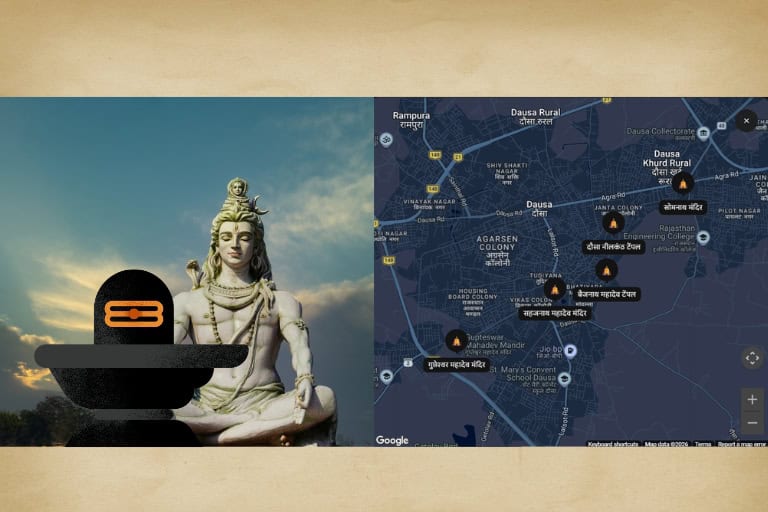
The main Balaji temple is the heart — but Mehandipur is an entire sacred geography. Once you have completed the main darshan, these temples and sites are part of the complete pilgrimage experience. You may explore these temples in our this post (Important Temples in the Mehandipur Complex)
Mehandipur Balaji Temple — FAQs
Everything devotees ask before planning their visit to Mehandipur Balaji Temple, Dausa.
Mehandipur Balaji Temple is located in Mehandipur village, Sikrai Tehsil, on the Dausa–Karauli border in Rajasthan, India.
Mehandipur Balaji Temple is famous for its unique spiritual rituals believed to remove negative energies and unexplained problems. Devotees visit this Hanuman temple seeking relief from fear, stress, and spiritual disturbances.
The temple is known for its powerful healing rituals, especially involving Lord Hanuman (Balaji), Pretraj Sarkar, and Bhairav Baba. Many devotees believe that prayers here help overcome mental and spiritual issues.
Mehandipur Balaji Temple in Rajasthan is widely known for rituals related to removing negative energies and spiritual disturbances. Devotees strongly believe in its power for healing such conditions.
You can visit Mehandipur Balaji Temple by road, train, or air. The nearest railway station is Bandikui (30 km), and Jaipur Airport is about 100 km away. Most visitors prefer road travel via NH-21.
Tuesday and Saturday are considered most auspicious for visiting Mehandipur Balaji Temple. However, these days are very crowded, so early morning darshan is recommended for a peaceful experience.
Yes, prasad can be consumed, but devotees often follow temple-specific customs regarding its use. It is recommended to follow local practices and guidance from temple sevaks.
Khatu Shyam Temple is approximately 140–150 km from Mehandipur Balaji and takes around 3 to 4 hours by road depending on traffic and route.
Salasar Balaji Temple is around 110–120 km from Mehandipur Balaji and takes about 2.5 to 3 hours by road.
Temple darshan timings are: 7:00 AM – 11:00 AM, 12:00 PM – 6:30 PM, and 7:10 PM – 9:00 PM. Aarti timings are especially significant — visiting during early morning or evening aarti is highly recommended.
You can find photos of Mehandipur Balaji Temple on Google, travel websites, and social media platforms. Please note that photography inside the temple is usually restricted out of respect for devotees and the sanctity of rituals.
The temple is believed to be self-manifested (Swayambhu). According to legend, Lord Hanuman appeared here to help devotees overcome negative energies and suffering — a divine calling that established this sacred site as one of India’s most revered Hanuman temples.
Temples Around Dausa District
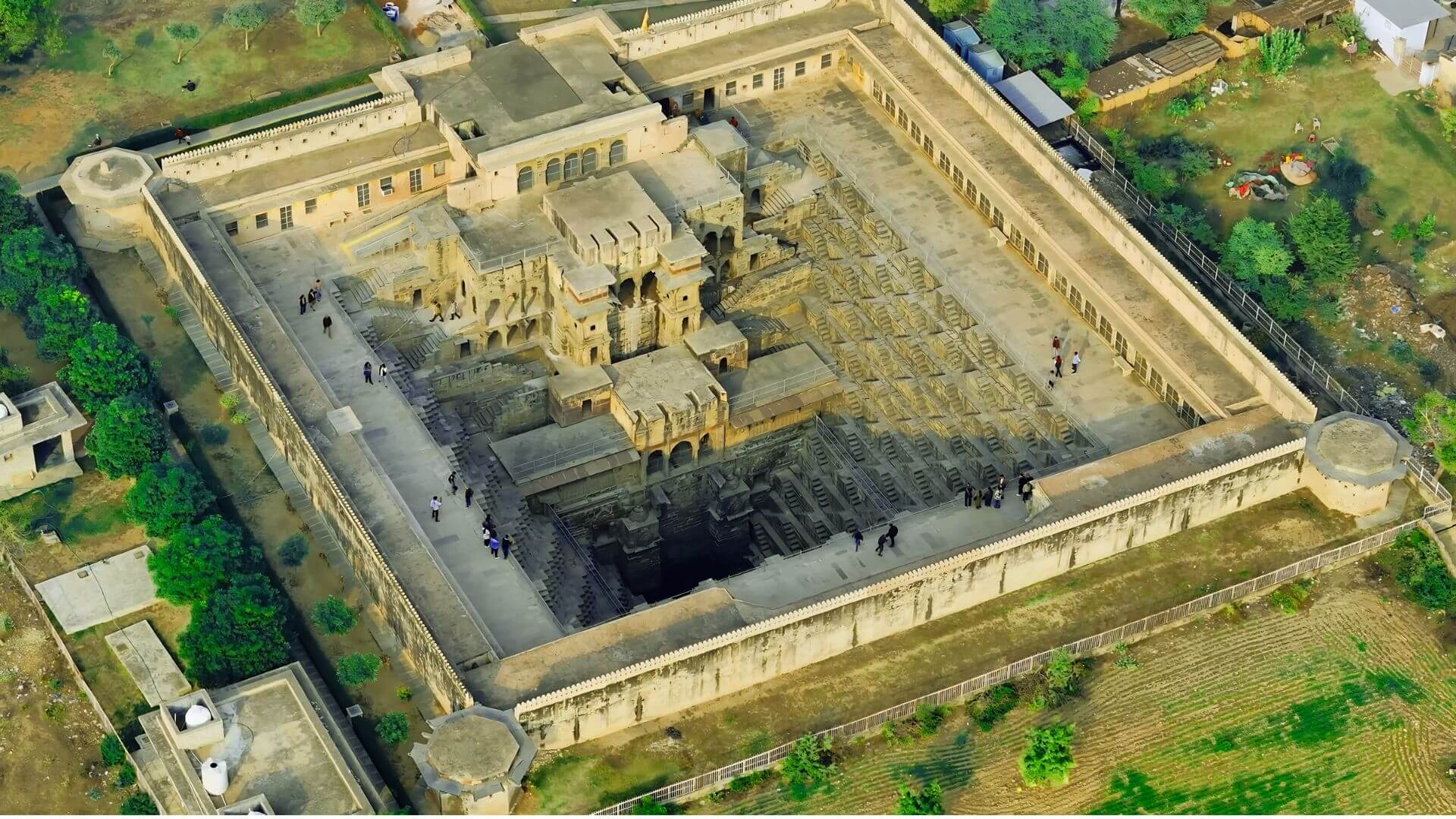
Explore sacred temples and heritage sites near Mehandipur Balaji